There’s a fork-in-the-road moment every kitchen faces: gas knob or charcoal. One is a tool. The other is a commitment. The twelve restaurants in this guide all took the hard left — places where the fuel is chosen with intention, the heat is earned not dialled, and the cook has enough patience to let fire do what fire actually does. Three traditions, twelve kitchens, one obsession.
Fire Cooking Explained: Parrilla, Josper, Smokehouse, Braai — What the Terms Actually Mean
Most restaurant reviews drop these words without explanation. Here’s what’s actually happening in these kitchens, because understanding the method changes what you taste.
The Parrilla
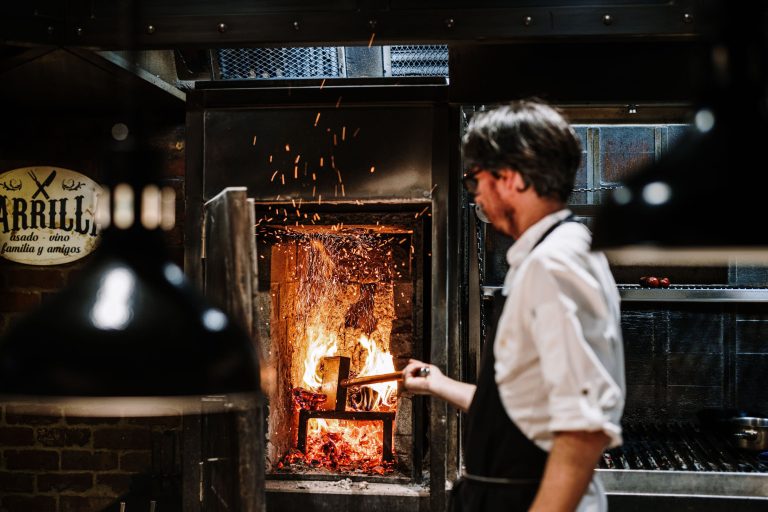
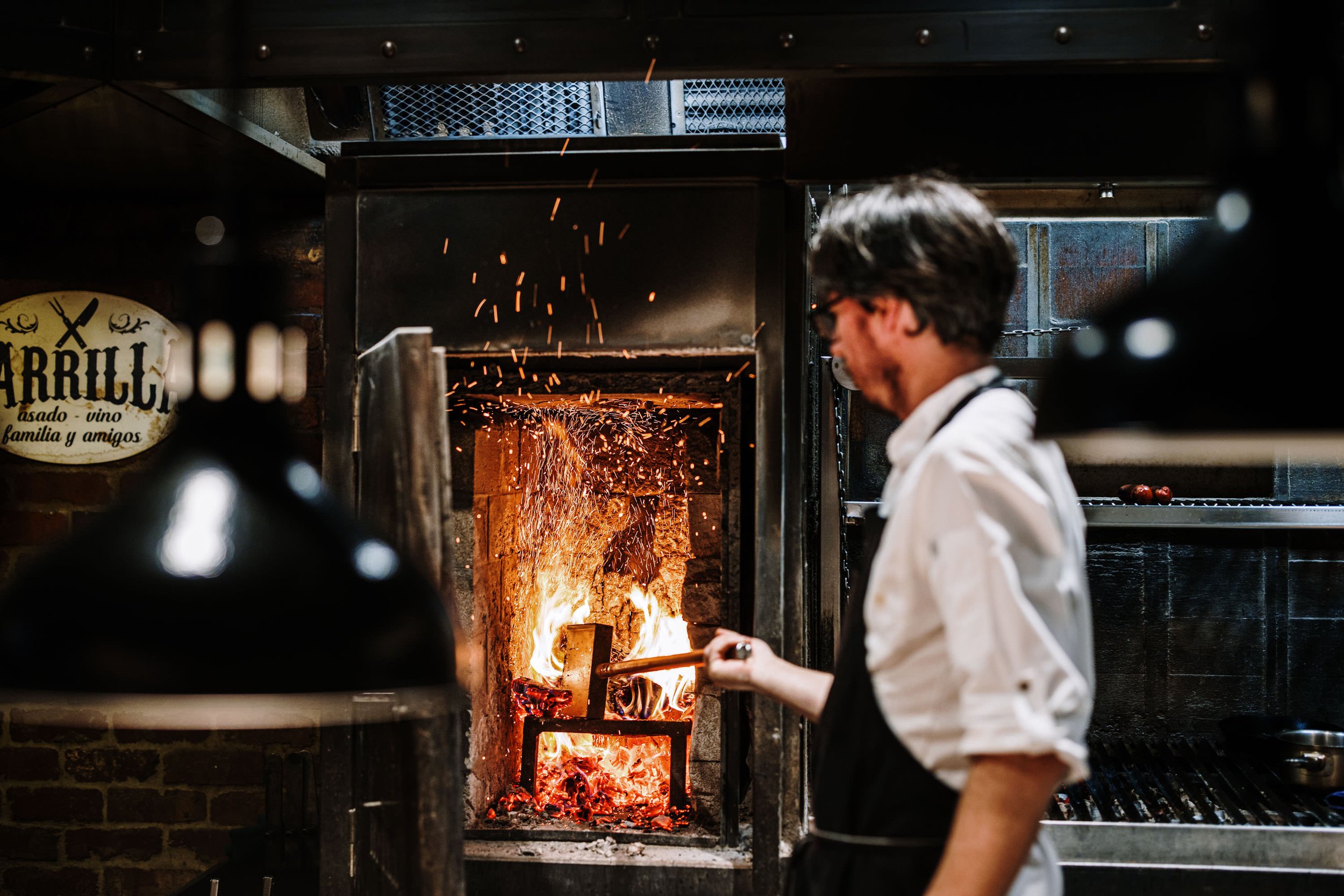
An Argentine-style open charcoal grill where fire burns below a metal grate and the beef cooks over direct heat. No dials, no thermostat — just fire management built on experience. The cook controls temperature by adjusting grate height or coal intensity. The fuel choice matters enormously here. San Telmo grills over mallee root charcoal — harvested from the root systems of mallee eucalyptus trees in South and Western Australia, it burns slower and at lower temperatures than ironbark, producing a steady, earthy heat that suits the sustained cooking the parrilla requires. The result is a crust from direct radiant heat that no oven can replicate.
The Asado Fire Pit
More primal than the parrilla. An open fire burning whole logs rather than processed charcoal, used for the kind of slow cooking that takes hours — whole lamb, suckling pig, large bone-in cuts. Palermo in the CBD runs Melbourne’s most serious asado fire pit, burning a combination of mallee-root charcoal and ironbark logs. The mallee root provides the patient, sustained lower heat the slow roasting requires. The ironbark — one of Australia’s densest hardwoods, found across northern Victoria and NSW — provides intense structural heat and long burn time. Two fuels, two jobs, one fire.
The Josper
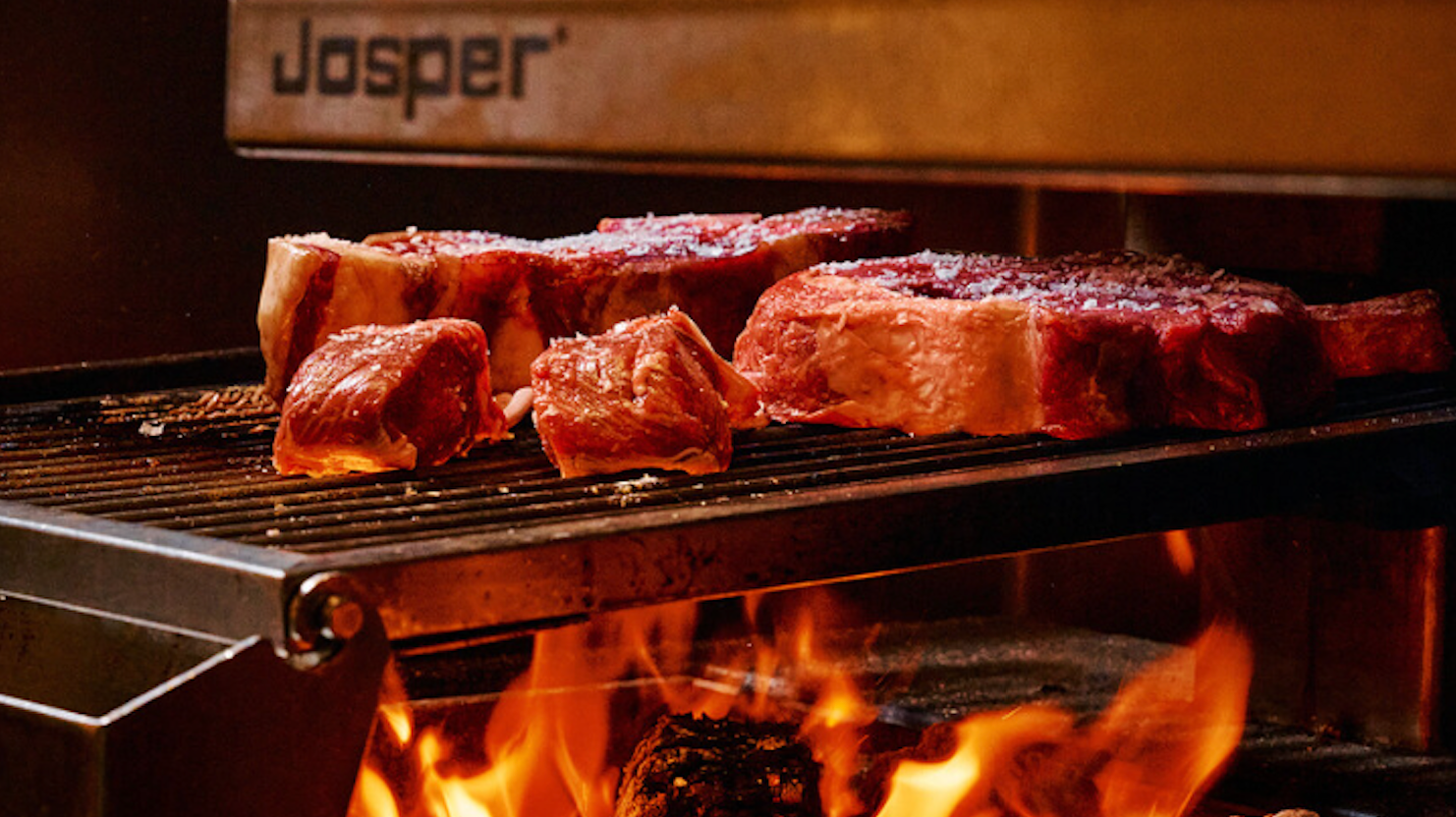
A Spanish-invented closed charcoal oven-grill hybrid, created in 1969 in Barcelona by Pere Juli and Josep Armangué — the name joins the first syllables of their names. It operates at 300 to 350 degrees Celsius, combining a grill and oven in a single enclosed unit. The sealed door traps smoke and heat simultaneously, searing the outside of the meat at extreme temperatures while locking moisture inside. Charcoal consumption drops by 40 percent compared to an open grill, and temperature is controlled via air vents. Used at Grill Americano, Blackbird and Blacksmith. The Josper Basque Grill — Blackbird’s variant — is inspired by Basque grilling traditions and open at the top, letting direct flame contact the meat from above as well as below.
Ironbark
One of Australia’s hardest and densest hardwoods. Ironbark burns extremely hot and holds temperature even when cold proteins hit the grates — critical for the hard, fast sear that defines fire-cooked steak. It produces intense, clean heat with low smoke output, which is why it’s the fuel of choice when you want crust over smoke. Rockpool uses ironbark charcoal across their wood-fired grill. Meatmaiden specifies Blue Mountains ironbark for their smoker, running it continuously. Reine & La Rue uses ironbark for the open-fire hearth. Blackbird cooks over ironbark on the Josper Basque. It’s the most-used premium fuel in Melbourne’s top fire kitchens.
The Smokehouse
The opposite of high-heat grilling. Where a parrilla or Josper sears at 300 degrees or above, a smokehouse runs at 100 to 130 degrees Celsius for hours, allowing wood smoke to penetrate deep into large, collagen-rich cuts. The result — on brisket, short rib, pork shoulder — is fundamentally different from anything achieved by oven or grill: the smoke binds with the proteins during the long cook, creating a flavour that lives inside the meat rather than just on its surface. Meatmaiden runs Melbourne’s most serious smokehouse operation — an American-built smoker kept lit around the clock with Blue Mountains ironbark, producing the 20-hour smoked Rangers Valley brisket that’s become one of the city’s most referenced fire-cooking dishes.
The Braai
The South African equivalent of the Argentine asado — an open fire barbecue tradition where hardwood or fruit wood is burned down to embers, then used to grill meat over direct heat. The flavour profile is distinct: earthier, sometimes fruitier than pure charcoal, with a smoke character tied directly to the wood used. Old Palm Liquor’s chef Almay Jordaan brings this tradition from her South African upbringing, running a wood-burning open fire grill alongside an Argentine parrilla in Brunswick East — the only restaurant in Melbourne operating both traditions in the same kitchen.
Argentine Parrilla Restaurants Melbourne: Charcoal, Patience, Three Kitchens
San Telmo, Asado and Palermo are from the same group and share the same founding conviction: that Argentine charcoal grilling is a legitimate culinary tradition worth building a restaurant around. Each one does something different with it. All three are worth understanding as distinct expressions of the same fire culture.
1. San Telmo
📍 14 Meyers Place, Melbourne CBD
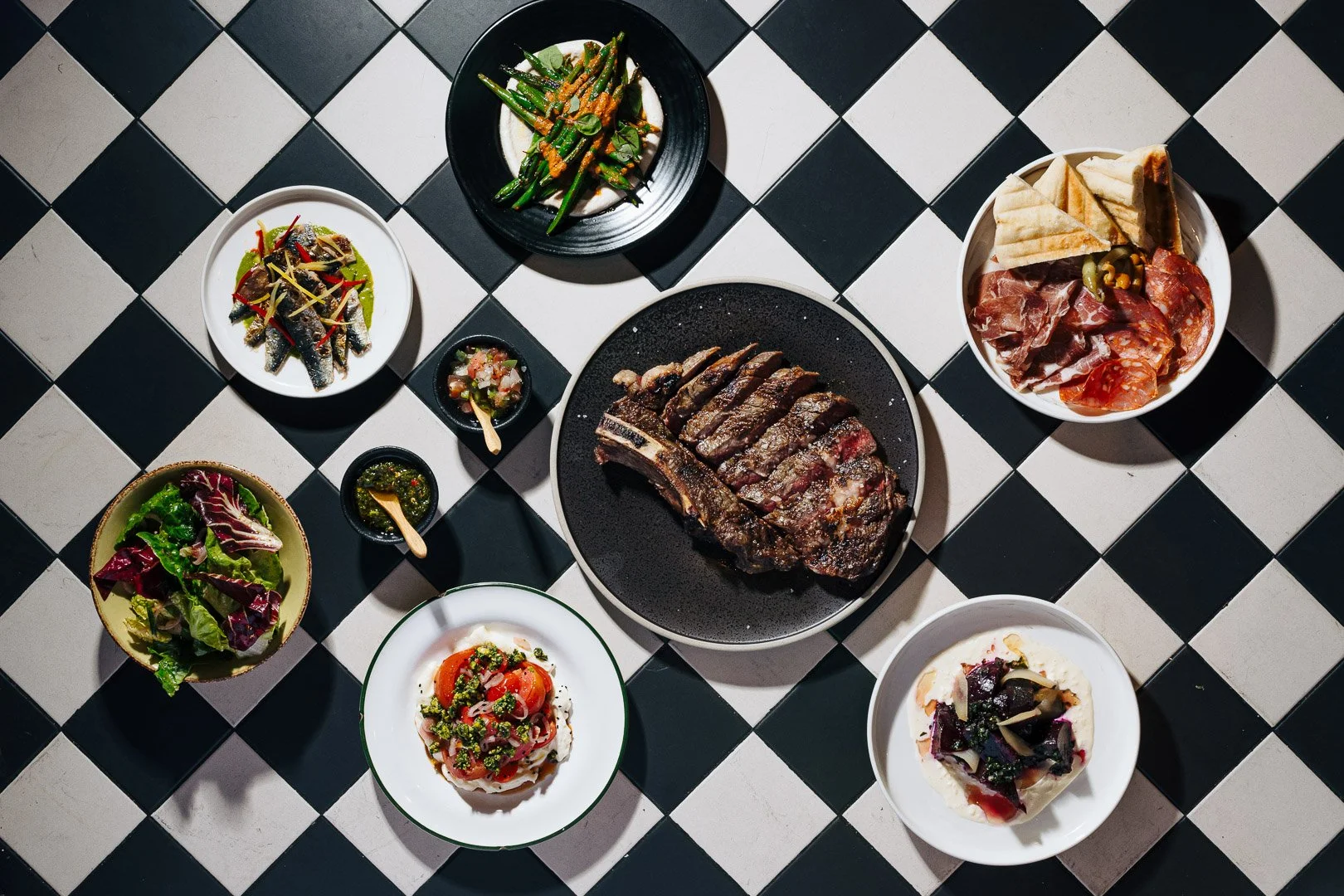
San Telmo has been running the same fire for over a decade. The 2.5-metre parrilla charcoal grill at the centre of the kitchen — custom-made in Argentina by Pirincho, whose previous clients include former Argentine presidents and the Ferrari workshop in Modena — is not a set piece. It’s the reason the restaurant exists.
The fuel is mallee root charcoal, and that choice is deliberate. Mallee root burns at a lower, steadier temperature than ironbark, producing the sustained, even heat that allows the parrilla grill to cook beef the Argentine way — long enough to render the fat, develop the crust, and concentrate the flavour without scorching the exterior. It’s the difference between a fire that performs and a fire that endures.
The room sets the expectation before you’ve ordered: entrance doors salvaged from a Buenos Aires mansion, heavy timber tabletops imported from Argentina, cowhides throughout, bone-handled steak knives. The menu revolves around O’Connor beef from Gippsland, and the Ojo de Bife — the dry-aged rib-eye — is the order. Fire-textured crust, pink and generous within, with house chimichurri that carries genuine chilli heat and red wine vinegar acidity sharp enough to cut through the fat. It lifts the beef. It doesn’t fight it.
The smaller plates earn their place. The provoleta — seared provolone with crisp, gooey edges — is the right way to start. The zanahorias (baby carrots charred directly on the grill with goat’s curd and thyme) are among the best vegetable dishes in the city, which says something about how seriously this kitchen treats everything that goes over the fire. San Telmo fills every night. Book ahead.
Fuel: Mallee root charcoal parrilla, custom-built by Pirincho
Order: Ojo de Bife, chimichurri, provoleta, zanahorias
2. Asado
📍 6 Riverside Quay, Southbank
Smoke hits you before the menu does. Asado runs on the Argentine principle that fire and patience are the two most important ingredients — and the Southbank room they’ve built around that idea earns its address: warm timber, the Yarra visible beyond the windows, a pace to a Tuesday afternoon that recalibrates what lunch can be.
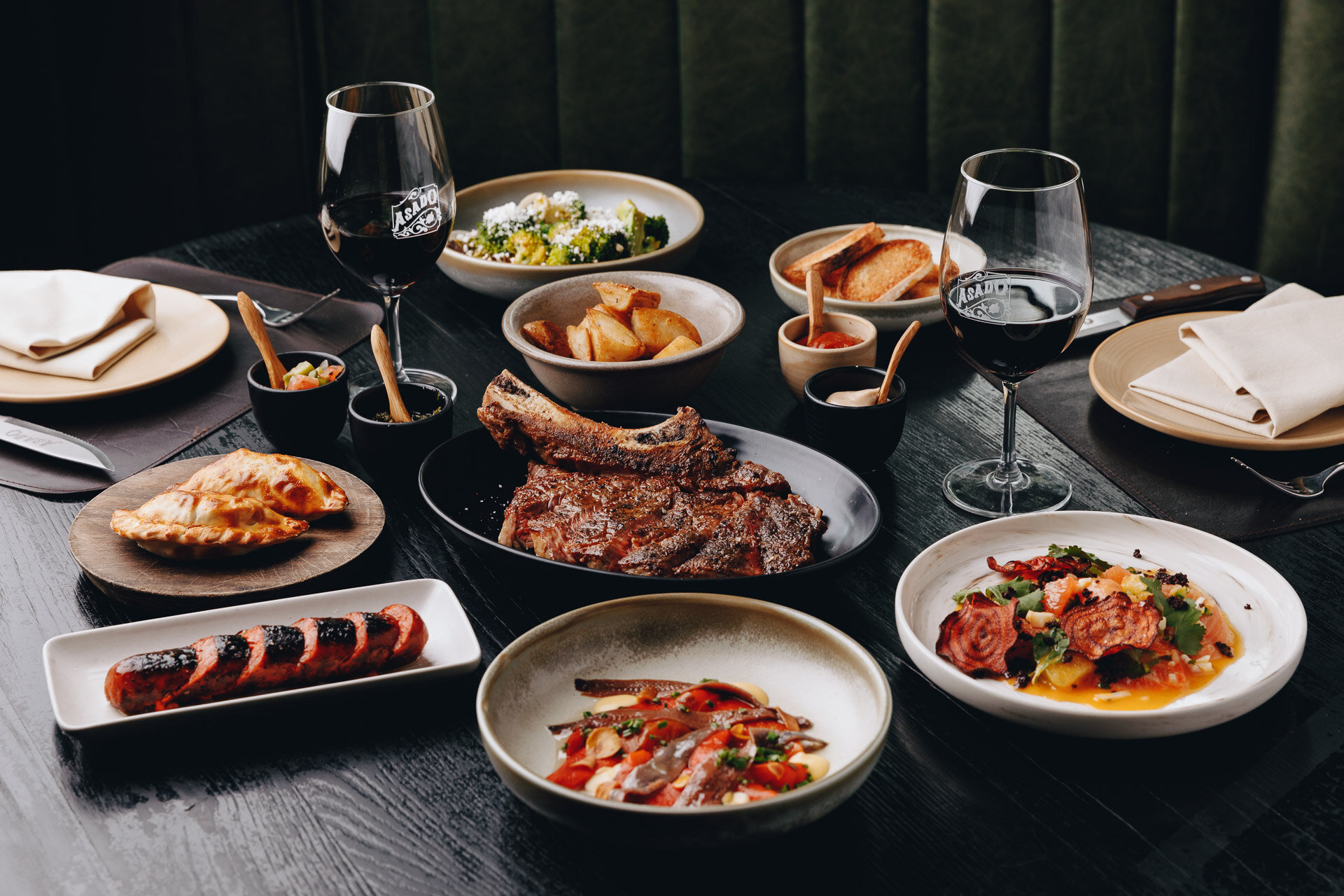
We started with the Lengua — grilled ox tongue skewers that will challenge every assumption you carry about the cut. Soft, fatty, almost indulgent, nothing like the firm slices at a hotpot table. The green sauce alongside — jalapeño, snow pea, feta — cuts through the fat cleanly. Then Provoleta: seared provolone with yellow romesco and pickled fennel, warm bread, honey butter with a lemon note that had us ordering the bread twice.
The Entraña is why you come. Sher Wagyu inside skirt, MS6, grain-fed from Victoria — cooked with real precision on the parrilla, finished with chimichurri and herb oil that support rather than mask the beef. Fatty, textured, the kind of steak that brings a table to a brief, satisfied quiet.
One honest note: the cabbage and almond side that arrived with the steak flattened the umami rather than cutting through it. You want acidity and sharpness to reset the palate between bites of fat-rich beef — a grilled broccolini or rocket with lemon would do that job far better. The grill work here is too good to be underserved by the sides. The El Rápido Lunch Special at $45 per person (Monday to Thursday, 12 to 4pm) is the most intelligent use of a weekday lunch in Southbank. We’ll be back.
Fuel: Argentine charcoal parrilla
Order: Entraña, Lengua, Provoleta — choose your sides carefully
3. Palermo
📍 401 Little Bourke Street, Melbourne CBD
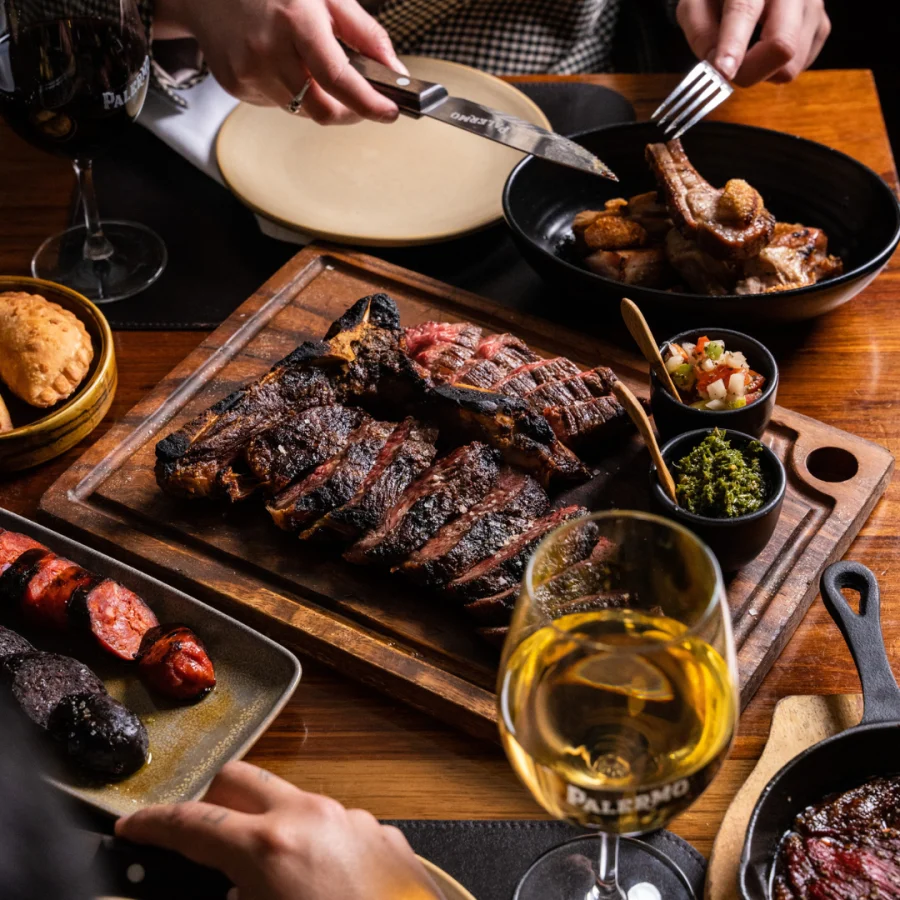
The most technically ambitious kitchen in the San Telmo group. Where San Telmo and Asado rely on the parrilla, Palermo adds a circular redbrick asado fire pit burning a combination of mallee-root charcoal and ironbark logs — two fuels doing two different jobs in one fire. The mallee root provides the slow, lower-temperature burn that the patient asado method requires. The ironbark contributes the structural, high-heat intensity that gives the exterior of the meat its char.
Over that fire, the kitchen slow-roasts whole Gippsland Suffolk lamb and suckling pig from Millbrook for hours, sold in 250-gram and 450-gram portions when they’re ready. The parrilla handles the dry-aged O’Connor beef cuts alongside. The concept celebrates the Italian influence on Argentine food culture — deeper than most people realise, given Buenos Aires’s enormous Italian diaspora. The room is large and handsome: harlequin tiles, marble benches, exposed brick, a hand-painted mural of the Tuscan countryside uncovered during renovation. The wine list stays loyal to Mendoza and Patagonia. The in-house butcher adjusts the specials board based on what’s performing best through the fire that week.
Fuel: Asado fire pit (mallee-root charcoal + ironbark logs) + Argentine charcoal parrilla
Order: Slow-roasted lamb or suckling pig from the asado pit, O’Connor beef from the parrilla
European Wood Fire Steak Melbourne: Ironbark, Josper and Old-World Grilling
The European wood fire tradition predates every steakhouse concept you can name. Bistecca alla Fiorentina over embers in Tuscany. Steak over wood in the grand brasseries of Paris. The Basque grilling culture that inspired the Josper’s invention in Barcelona in 1969. These three Melbourne restaurants draw from that lineage and apply it to Victorian and NSW beef that the original kitchens would never have had access to.
📍 380 Collins Street, Melbourne CBD
Nothing really prepares you for the room. The former Melbourne Stock Exchange — now the Cathedral Room — has Gothic vaulted ceilings, stained glass windows among the oldest in Victoria, granite columns, and a 10-metre marble bar running the full length of the space. It looks like a church. It operates like a French brasserie anchored by an ironbark wood-fired open fire grill.
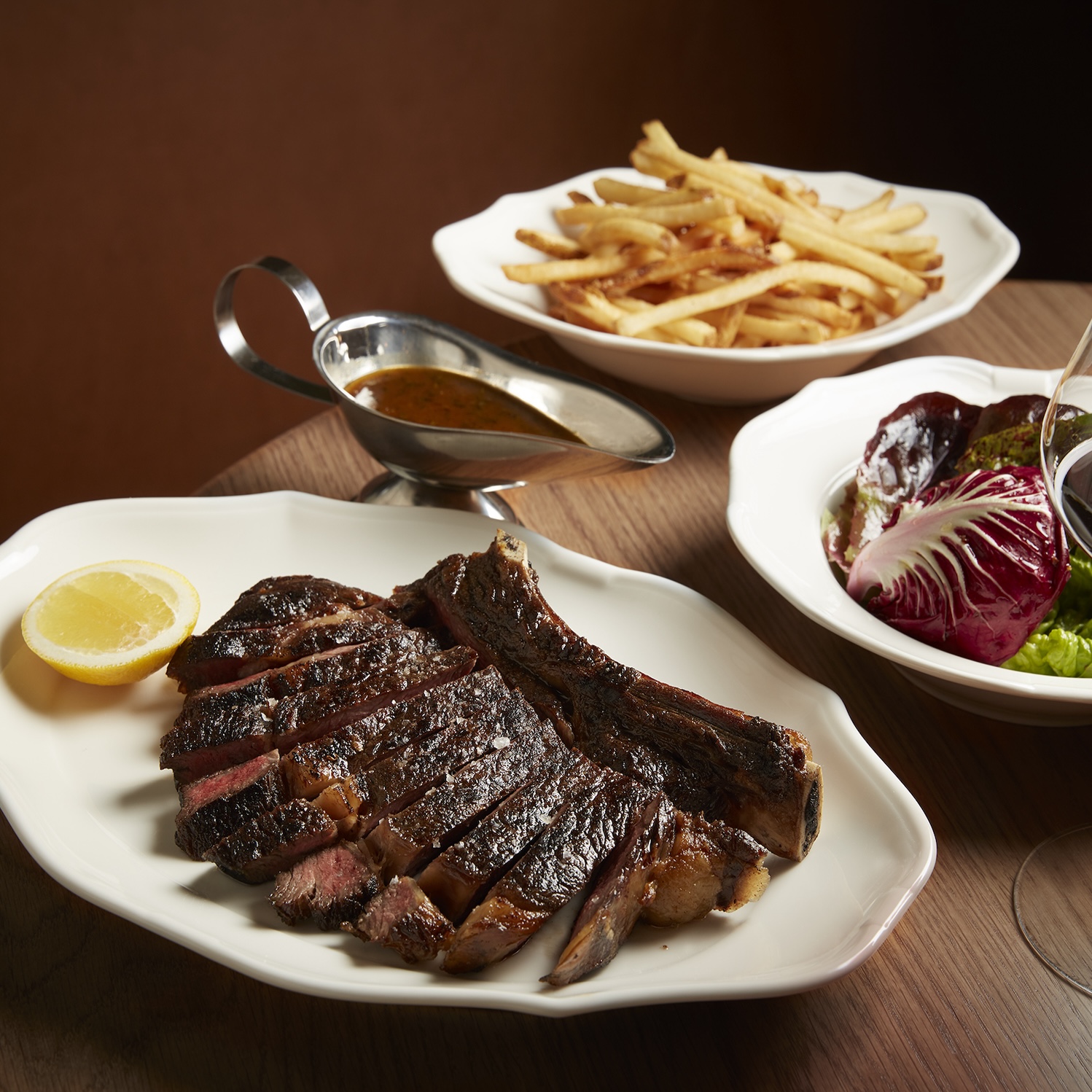
Ironbark is the right fuel here. Its exceptional density means it burns hot and holds temperature even when cold, heavy beef hits the grates — producing the hard, fast sear that defines the crust on the cuts coming out of this kitchen. We ordered the rib eye on the bone — Blackmore Wagyu, properly rested, tender and fatty, with real char from the ironbark fire. The kitchen sends it simply: the right call when the beef is this quality. Five classic sauces alongside the grill section — Bordelaise, Au Poivre, Béarnaise, Café de Paris, Sauce Verte. The Béarnaise is as good as it should be in a room with two hats.
The side you won’t regret ordering: smashed potato with bone marrow and jus gras. It is the fine-dining version of KFC mashed potato — insanely creamy, so rich with bone marrow and reduced meat jus that you keep returning to it between bites of steak. Order it. The 700-bottle wine list pours 40 by the glass. Good Food Guide New Restaurant of the Year 2024, Two Hats 2025/26.
Fuel: Ironbark wood-fired open fire grill
Order: Rib eye on the bone, Béarnaise, smashed potato with bone marrow and jus gras
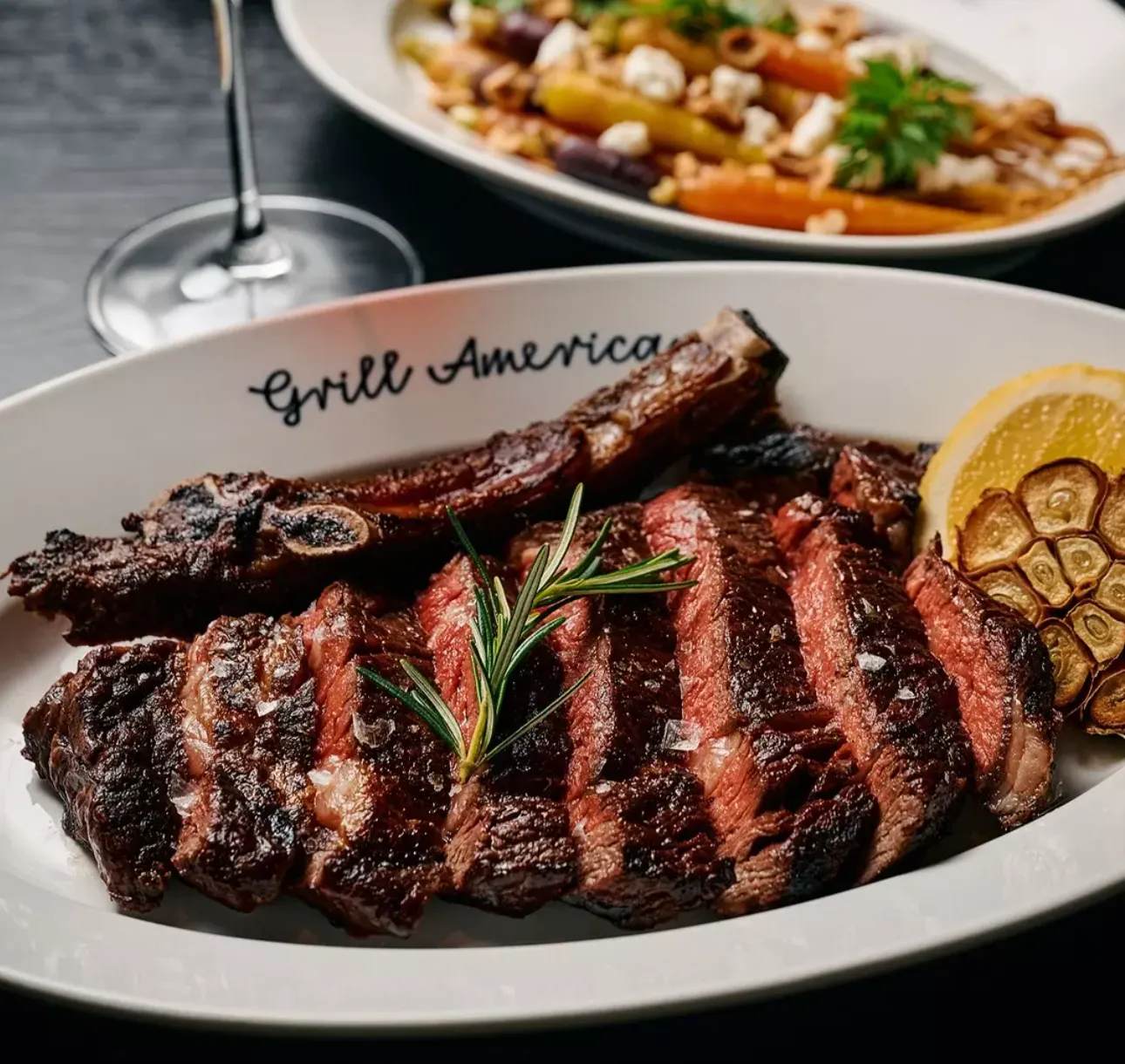
📍 101 Collins St, Melbourne CBD
Chris Lucas built Grill Americano as a revival of the Italian steakhouses that shaped Melbourne dining in the 1960s and 70s — venues like Bill Marchetti’s Tuscan Grill, where Frank Sinatra reportedly had a standing table. The brief was Italian grandeur, North American scale, Melbourne heart. The room delivers: 14-metre marble bar, white-jacketed service, Venetian furniture, kinetic energy that makes you feel like the evening actually matters.
Two distinct fire tools drive the kitchen: a hand-built woodfire oven imported from Naples and a Josper charcoal grill. The woodfire oven handles the 1.2kg Bistecca alla Fiorentina — a thick-cut T-bone finished with sea salt, rosemary and lemon, designed to share, the kind of order that makes a table feel like they’ve done something right. The Josper handles smaller cuts where its enclosed, precision heat is the advantage — operating at up to 350 degrees with the door sealed, it sears the outside hard while holding the interior juicy in a way an open grill can’t guarantee on a busy service. The quattro formaggi mac and cheese is the side. The tiramisu, scooped tableside from an oval dish, has become one of Melbourne’s most discussed desserts for good reason. Wine cellar: 2,000 bottles. Ranked 92nd globally in 2025, 27th in Australia in 2026.
Fuel: Hand-built woodfire oven (Naples) + Josper charcoal grill
Order: Bistecca alla Fiorentina to share, quattro formaggi mac and cheese
6. Gimlet
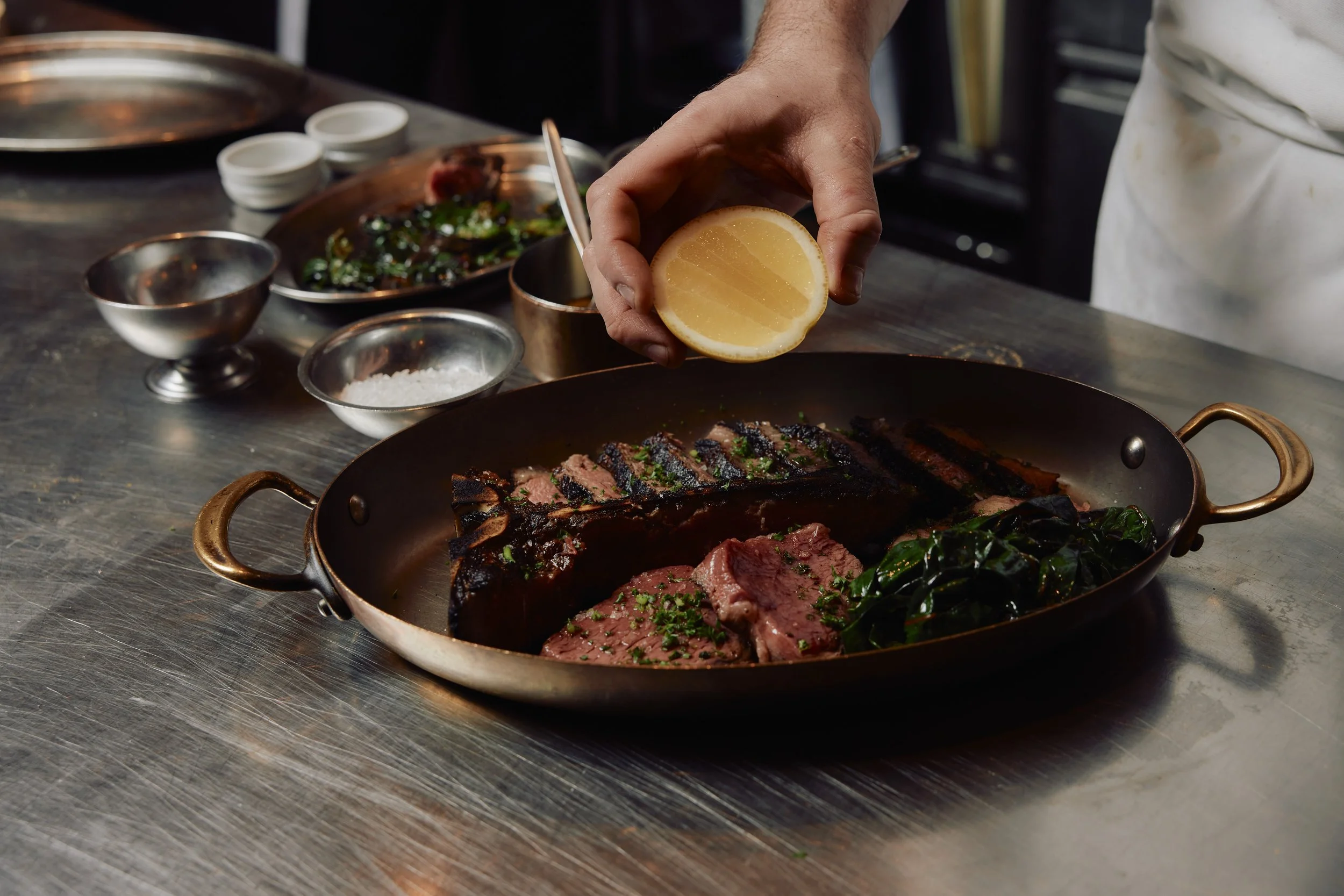
📍 33 Russell Street, Melbourne CBD Cavendish House
Andrew McConnell’s 1920s Cavendish House dining room opened in 2020 and carries itself as though it’s been there fifty years — velvet banquettes, chandeliers, plush horseshoe booths, art deco columns. It jumped from 94th to 45th in the World’s 101 Best Steak Restaurants between 2024 and 2025, the second-largest single-year rise on the list, and that jump tracks directly with the development of the kitchen’s fire cooking programme.
The wood-fired hearth drives the steak menu. Gourmet Traveller describes it as small but impeccable: dry-aged, grass-fed cuts from Victoria and South Australia, turned out with precision from the fire. The 900-gram charcoal-grilled O’Connor T-bone is the showpiece — Gourmet Traveller calls it a hulking, deeply charred centrepiece and describes the overall experience as classic indulgence with a touch of theatre. The Blackmore Wagyu sirloin is handled equally well. Sides are designed with the same rigour as the main: potato galette, charred brassicas, a béarnaise that’s rich, glossy and structurally sound. Bookings are essential, at least a week ahead for weekend evenings.
Fuel: Wood-fired hearth
Order: O’Connor T-bone or Blackmore Wagyu sirloin, potato galette, béarnaise
Contemporary Australian Fire Cooking Melbourne: Josper, Ironbark Smoker, Open Flame
The third tradition isn’t geographically fixed. It’s defined by Australian producers and Australian hardwoods applied to a generation of kitchens that have chosen fire as the organising principle of the whole menu. Josper grills, ironbark smokers, open flames — and in at least one case, a chef who sources specific timbers to match specific proteins as deliberately as a sommelier matches wine to a cut.
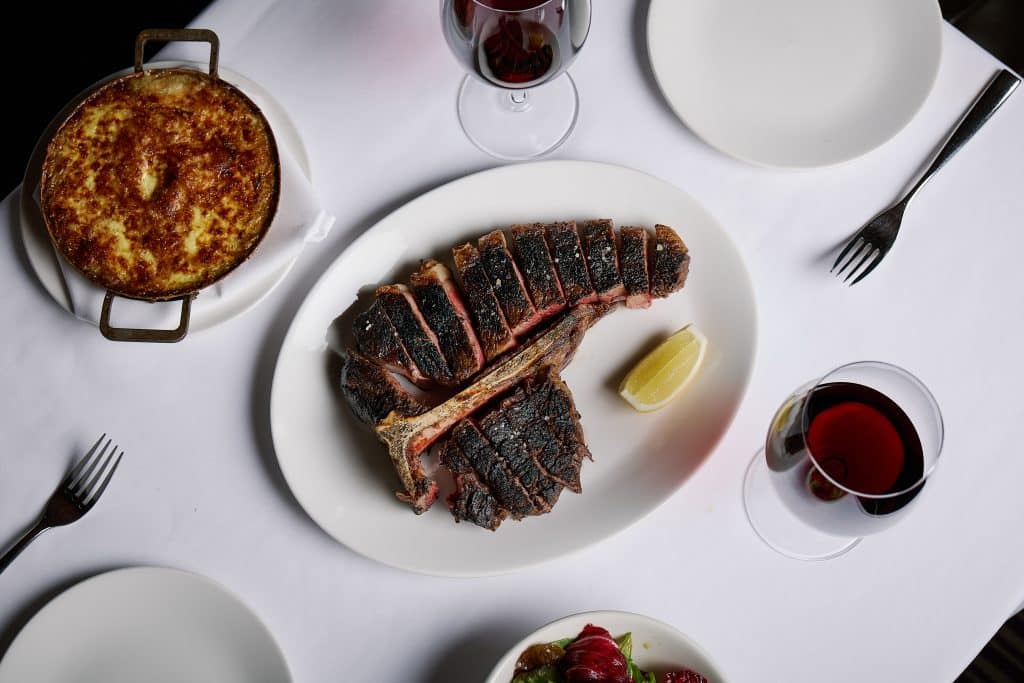
📍 8 Whiteman Street, Southbank Crown Melbourne
Rockpool Bar & Grill has been the room all other Melbourne steakhouses get measured against for nearly two decades. The wood-fired grill at the centre of the open kitchen runs on ironbark charcoal — confirmed by the World’s Best Steaks judges who noted it produces a perfect caramelised crust — and the meat programme is built on direct, long-term relationships with three producers: David Blackmore Pure Blood Wagyu, Cape Grim grass-fed from Tasmania, and Coppertree Farms dry-aged Friesian. All beef dry-aged in-house, up to 18 cuts on the menu at any given time.
Ironbark charcoal’s exceptional heat output is why it suits this kitchen. You need a fuel that can sustain consistent high temperatures across a long service while still performing at full sear on the first and last cut of the night. The Blackmore dry-aged scotch 9+ (30-day ageing) and the Coppertree Farms rib eye on the bone (32-day ageing) are the cuts with the longest track record of consistent praise from this kitchen. The 1,200-bottle wine list covers Australia and Europe. Not a restaurant of surprises — a restaurant of sustained execution at a level genuinely difficult to maintain across almost twenty years.
Fuel: Ironbark charcoal, wood-fired grill
Order: Blackmore dry-aged scotch 9+ or Coppertree Farms rib eye on the bone
8. Meatmaiden
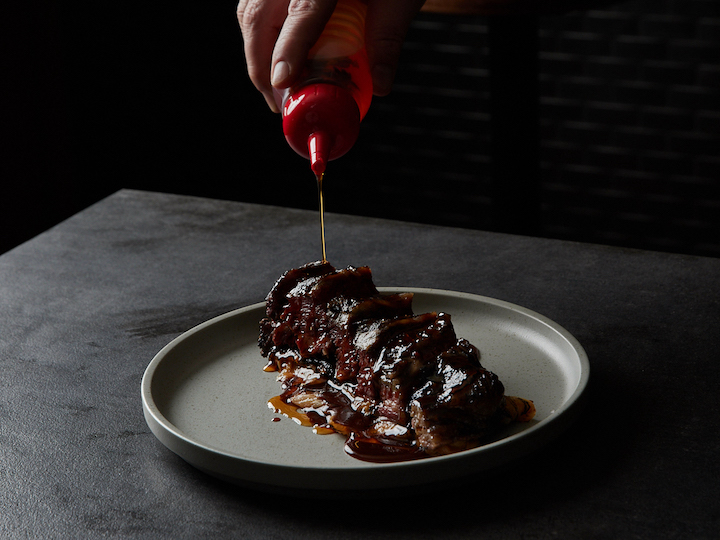
📍 195 Little Collins Street, Melbourne CBD basement
A dark maiden’s face stares from the Little Collins Street entrance. Descend the stairs and you’re in a basement that commits completely to its concept: dark neons, industrial fittings, butcher’s scales as centrepiece, dry-ageing cabinet visible from the door, cuts of O’Connor beef hanging in plain sight. Meatmaiden has been operating underground for over a decade and the room has ten years of Blue Mountains ironbark smoke in its walls.
Two pieces of equipment drive the kitchen. A custom-built charcoal grill for the dry-aged cuts from O’Connor and Rangers Valley Wagyu — direct heat, hard sear, crust from charcoal. And an American-built ironbark-fired smoker kept lit around the clock specifically with Blue Mountains ironbark from NSW. The Blue Mountains provenance matters: the ironbark grown in that region has a particular density and slow-burn quality that makes it ideal for the sustained, low-temperature smoke environment the 20-hour brisket requires. At 100 to 130 degrees Celsius over a full day, the ironbark smoke penetrates deep into the collagen of the Rangers Valley brisket, producing something that tastes fundamentally different from grilled or oven-roasted meat — the smoke is inside the protein, not just on it. The tomahawk ribeye on the bone is the flagship grill cut. Ranked 91st globally in 2025, 17th in Australia in 2026. The Maiden’s Mood — a seven-dish chef’s choice menu at $100 per head anchored by a featured steak — is the call for groups.
Fuel: Custom charcoal grill + Blue Mountains ironbark-fired smokehouse
Order: 20-hour smoked Rangers Valley brisket, tomahawk ribeye, Maiden’s Mood for groups.
9. Blackbird
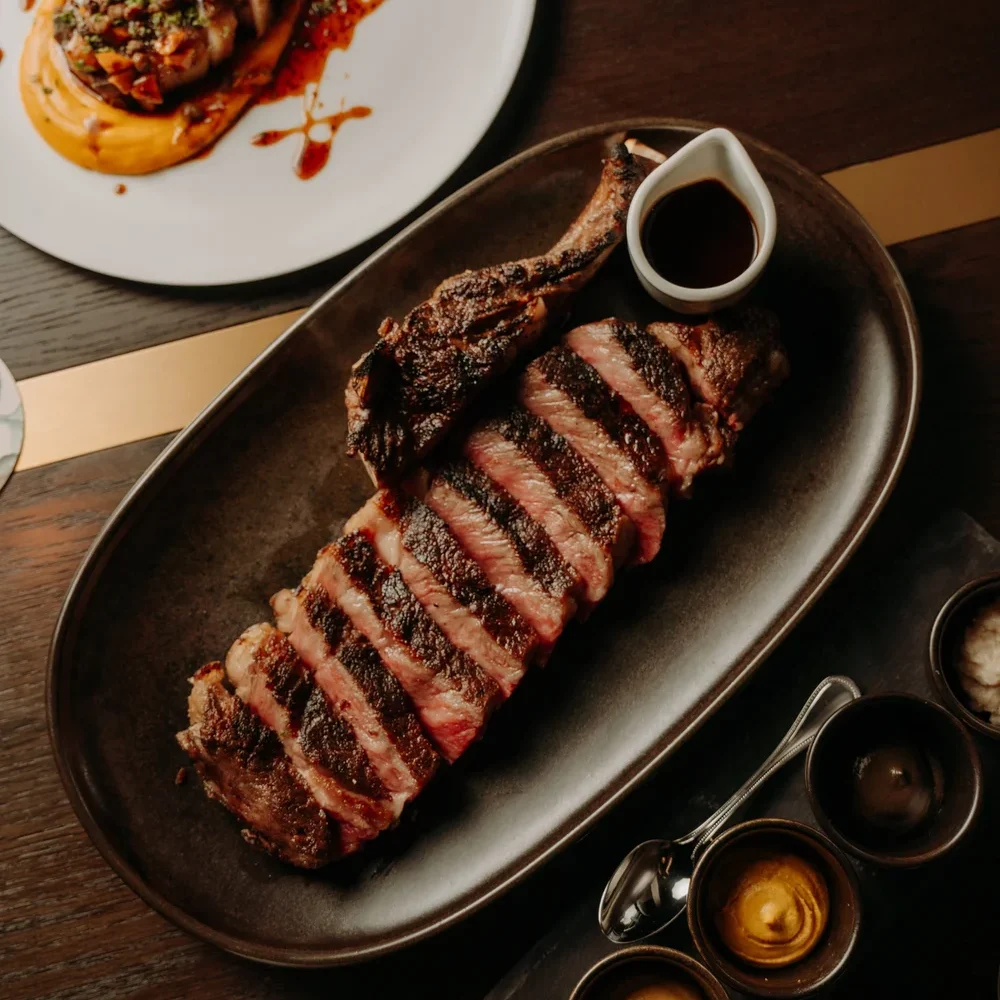
📍 66 Flinders Lane, Melbourne CBD Collins Place
Blackbird arrived from Brisbane in August 2025 — the newest kitchen on this list and the one with the shortest Melbourne track record. What it arrived with was serious: executive chef Tim Menger from Entrecôte, head chef Josh Moroney from Nomad. The Josper Basque Grill over ironbark is the cooking centrepiece, and every steak is aged in-house before it goes over the fire.
The Josper Basque Grill is the open-top variant — inspired by the grilling traditions of the Spanish Basque Country, it cooks over charcoal from above as well as below, at the high temperatures the enclosed Josper achieves. The ironbark fuel sustains those temperatures consistently. Combined with in-house dry-ageing, the results on the Mayura Station cuts have drawn early Melbourne reviewers to phrases like beyond divine and every detail executed to the highest standard. The showpiece is the chocolate-fed Mayura Station full-blood Wagyu tomahawk at 1.5 to 2kg, built for the table. In-house dry-aged Mayura Station striploin runs alongside a broader menu of native ingredients — Paroo kangaroo with pepperberry, wood-roasted rock lobster with warrigal greens. Three levels, dramatic chandelier, dark tones, mirrored ceiling. Ranked 28th in Australia in 2026. One to watch closely as it settles in.
Fuel: Ironbark on Josper Basque Grill
Order: Mayura Station Wagyu tomahawk to share, in-house dry-aged striploin.
10. Angus & Bon
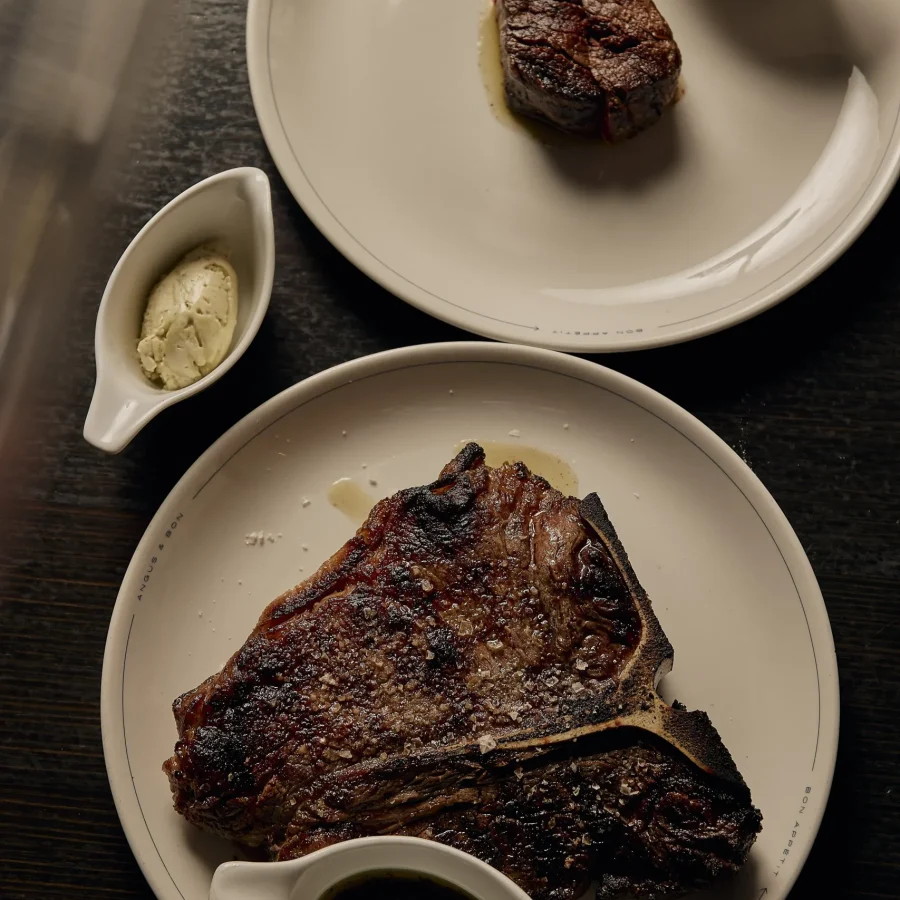
📍 168 Greville Street, Prahran
Named after Angus Young and Bon Scott of AC/DC and housed inside the 1928 Prahran Post Office, Angus & Bon earns its concept rather than coasting on it. The room — dark timber, rippling marble, wrought iron, heritage brick — sets a mood that’s been consistent since opening. There’s a bar for a mid-week visit and a proper dining room for a bigger occasion, and both are run with the same kitchen rigour.
The wood-fired grill draws on David Blackmore Wagyu and O’Connor Grass Fed Angus. The kitchen has Rockpool lineage, and that shows in the precision. The O’Connor 28-month dry-aged Rib Eye, medium-rare with Café De Paris butter, is the dish that keeps people coming back — the wood fire gives the crust a depth of char and light smoke character that gas cooking can’t produce. The tuna tartare is a consistent standout. The doughnuts with lime curd are the kind of dessert people mention unprompted weeks later. The $30 Thursday Prime Cut Steak Night at the bar is the most accessible quality fire-cooked steak in Melbourne.
Fuel: Wood-fired grill
Order: O’Connor 28-month dry-aged Rib Eye, Café De Paris butter, Thursday Steak Night ($30)
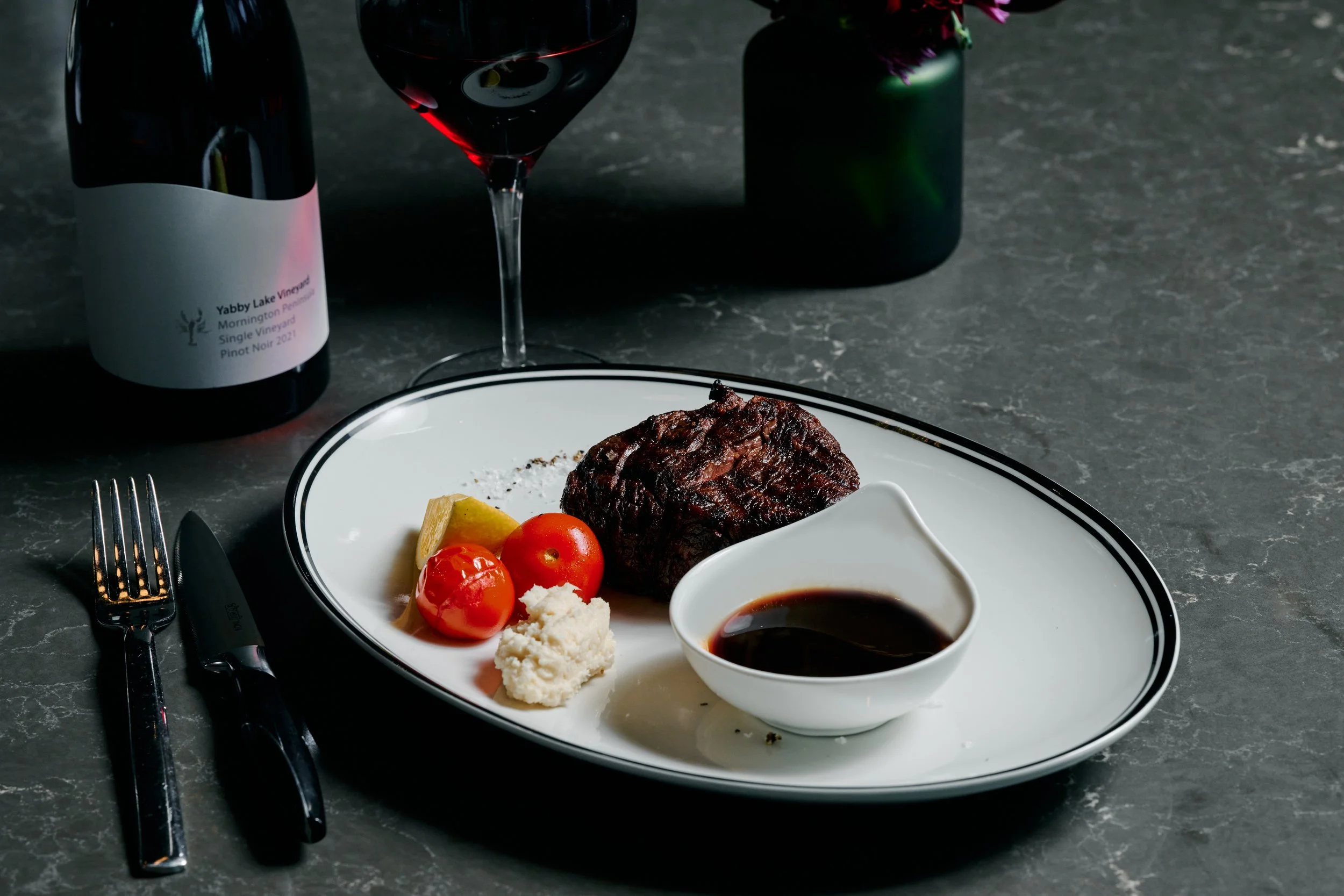
📍 Rooftop, Melbourne CBD
Blacksmith is the most accessible venue on this list — a rooftop fire grill that positions itself as fire-cooked, locally sourced food where steak is the main event, and delivers on that with Gamekeepers beef, CBD skyline views, and an energy the more serious venues on this list deliberately don’t offer. It won’t produce the depth of fire flavour you’ll find at a custom-built parrilla or an ironbark smokehouse running since dawn, and it’s not trying to. It’s honest about what it is and prices accordingly.
The $25 steak frites lunch and the Tuesday steak night are the entry points worth knowing. Fire-cooked steak with a city skyline, a relaxed atmosphere, and a bill that won’t require planning — Blacksmith is the direct answer to that occasion.
Fuel: Fire grill, rooftop | Order: $25 steak frites lunch or Tuesday steak night
The Gem I Personally Want to Gatekeep — South African Braai
12. Old Palm Liquor
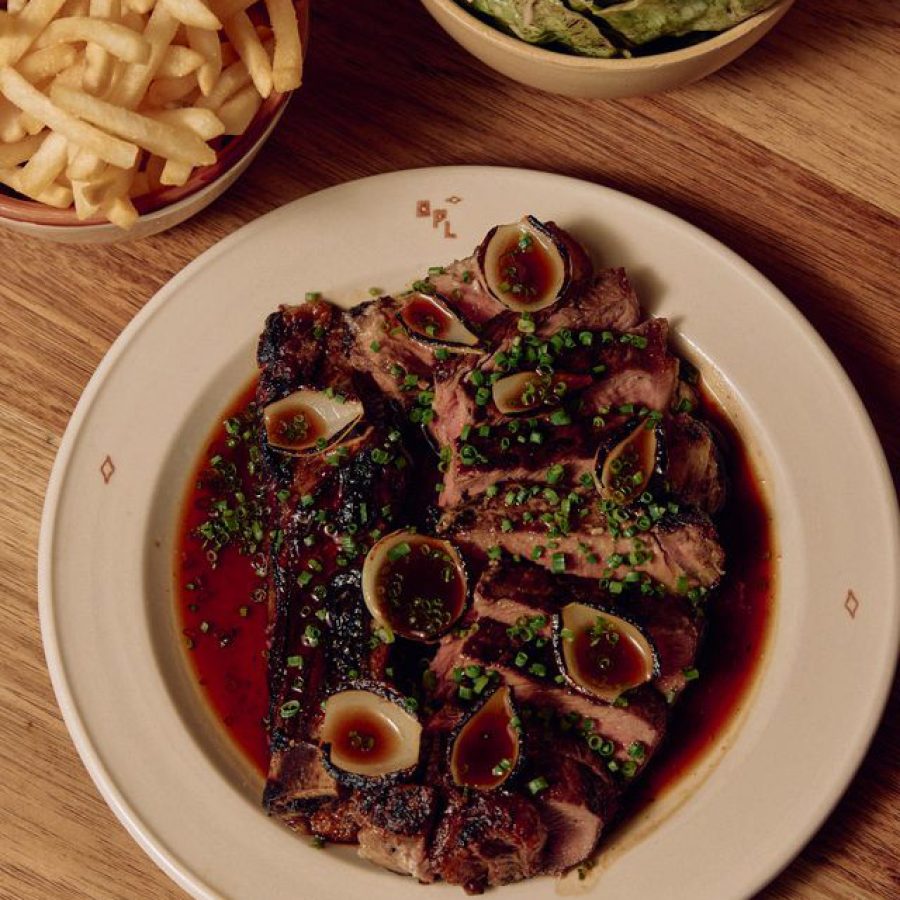
📍 133B Lygon Street, Brunswick East
Old Palm Liquor doesn’t announce itself as a fire restaurant. The room is 70s timber panels, rattan ceilings, ceiling fans, warm mood lighting — a neighbourhood pace that makes you want to stay for another glass before you’ve even ordered. The kind of place that turns a low-key night into a better evening than you planned for.
Chef and co-owner Almay Jordaan is South African, and her heritage shapes the menu through two fire sources: a wood-burning open fire grill and an Argentine parrilla — the only Melbourne kitchen running both the South African braai and Argentine parrilla traditions simultaneously. The braai culture she grew up with in the Western Cape centres on open hardwood fire, patient cooking, and smoke as flavour rather than incidental byproduct. That philosophy threads through everything on the menu.
Start with the wood-fired flatbread: charred at the edges, served with labne, yoghurt and garlic. The kind of dish that tells you within thirty seconds that the kitchen understands fire. The steak arrives with a proper open-fire char, paired with beef jus and mustard — bold, slightly smoky, a combination that doesn’t appear at most restaurants in this city. The wine list is exceptional: over 500 bottles heavy on natural and minimal-intervention producers from Australia, France and Italy, with rare finds that have no right being on Lygon Street. The list alone is a reason to make the trip.
Fuel: Wood-burning open fire grill (South African braai) + Argentine parrilla
Order: Wood-fired flatbread with labne and garlic, steak with beef jus and mustard, spend serious time on the wine list
How to Choose the Right Fire Restaurant in Melbourne for Your Occasion
FAQs
What is a wood fired steak restaurant?
A wood fired steak restaurant is one where the cooking heat comes from wood, charcoal, or open flame rather than gas or electric grills. This produces a distinctly different flavour — deeper char, natural smoke, and a crust that gas simply cannot replicate. The restaurants in this guide all use some form of fire as the primary cooking method for their beef.
What's the difference between a parrilla, a Josper and a wood-fired oven?
A parrilla is an Argentine-style open charcoal grill — the fire burns below a grate and the meat cooks over direct heat. A Josper is a closed charcoal oven-grill hybrid that delivers intense, concentrated heat from all sides. A wood-fired oven uses burning logs to heat a chamber, with the fire often burning to the side of the cooking surface. Each produces a different result on the meat.
What is the best wood fired steak restaurant in Melbourne?
It depends what you’re after. For the most authentic Argentine charcoal experience: San Telmo. For the most spectacular room with a serious open fire grill: Reine & La Rue. For world-ranked wood-fired cuts: Gimlet (ranked 45th globally, 2025) or Grill Americano (ranked 92nd globally, 2025). For the best value: Angus & Bon’s $30 Thursday Steak Night or Asado’s $45 El Rápido Lunch.
Where can I eat steak cooked over wood fire in Melbourne CBD?
San Telmo (charcoal parrilla, Meyers Place), Asado (Argentine parrilla, Southbank), Reine & La Rue (ironbark wood fire, Collins Street), Grill Americano (Naples woodfire oven + Josper, Flinders Lane), Gimlet (wood-fired hearth, Russell Street), Meatmaiden (custom grill + ironbark smoker, Little Collins Street), Blackbird (Josper Basque Grill + ironbark, Flinders Lane), Palermo (asado fire pit + parrilla, Little Bourke Street). Eight options within the CBD and Southbank precinct alone.
Is wood fired steak worth the premium price?
For the top-tier venues on this list, yes — provided you understand what you’re paying for. The fire cooking itself isn’t the only cost driver; the sourcing, in-house dry-ageing, and the service that comes with a serious dining room are all part of the price. If you want to test the premise at a lower entry point, Angus & Bon’s Thursday night and Blacksmith’s steak frites lunch both let you experience quality fire cooking without committing to a big evening spend.