There are plays you enjoy. There are plays you admire. And then there are plays that follow you home, settle quietly into your chest, and ask something of you long after the curtain has fallen. The Diary of Anne Frank, now playing at Melbourne’s historic Athenaeum Theatre, belongs firmly in that final, rare category.
Opening night of this production by Drew Anthony Creative landed on March 4 — and the city felt it. The Athenaeum, already one of Melbourne’s most beautiful and storied theatre spaces on Collins Street, seemed to hold its breath from the very first scene. I attended with my guest, Marleen Campbell, and neither of us spoke much on the way out. Not because we had nothing to say, but because words felt insufficient for a while.
A Story We Think We Know
Part of what makes this production so remarkable is how it dismantles our assumptions. Most of us know the name Anne Frank. We studied her diary in school, we’ve seen the images, we carry the headline version of her story. But knowing a story and feeling it are two entirely different things — and this production is committed, fiercely and compassionately, to making you feel it.
Written in 1955 by Frances Goodrich and Albert Hackett, the stage play is adapted from the diary Anne kept while she and her family hid in a concealed apartment in occupied Amsterdam between 1942 and 1944 — two years of extraordinary ordeal lived in a space no larger than a modest Melbourne flat. The play went on to win the Pulitzer Prize for Drama, the Tony Award for Best Play, and the New York Drama Critics’ Circle Award. Those accolades matter, but they are not what you think about inside the theatre. What you think about is a thirteen-year-old girl, writing by candlelight, determined to believe in the goodness of humanity.
Drew Anthony Creative Brings the Annexe to Life
This production comes directly from a critically acclaimed and sold-out season at Perth’s Heath Ledger Theatre, and arrives in Melbourne before continuing to the State Theatre in Sydney — so the work is already battle-tested and deeply assured.
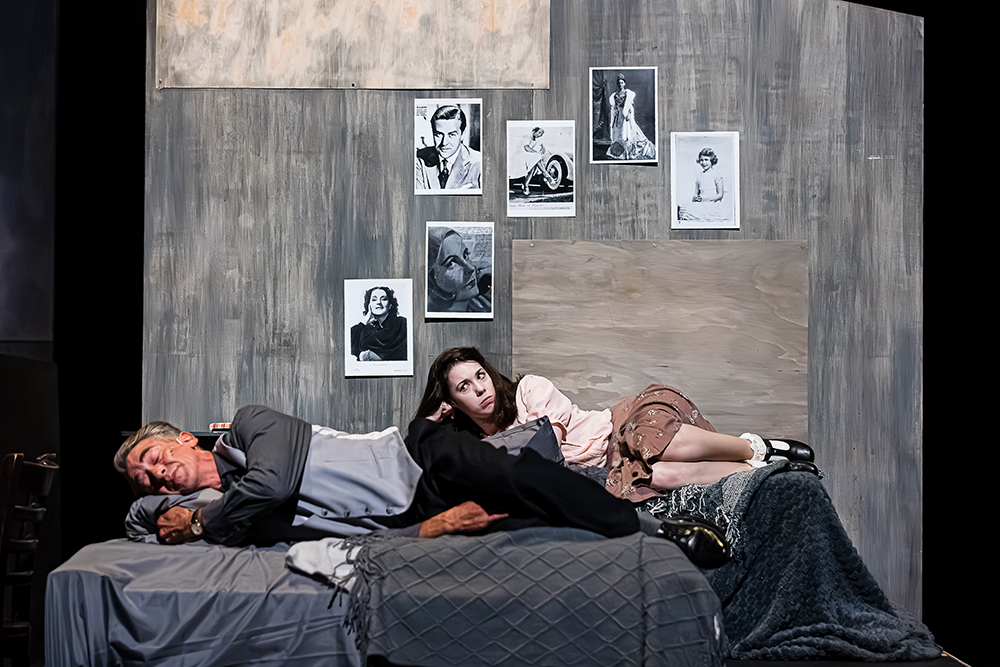
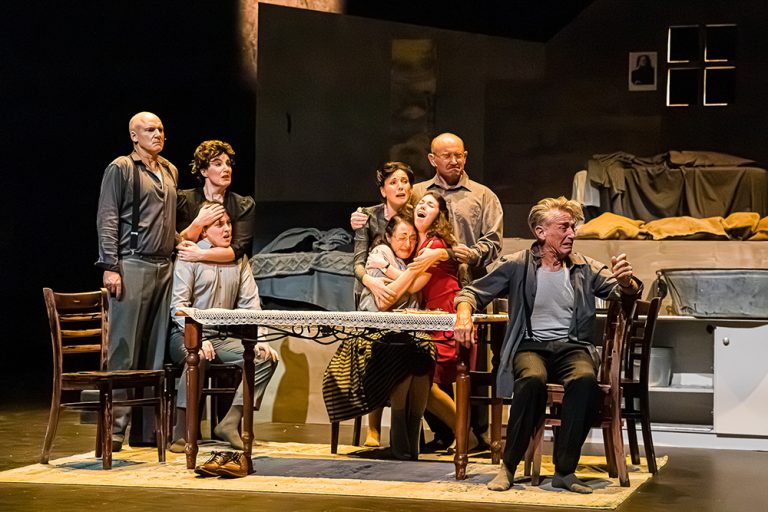
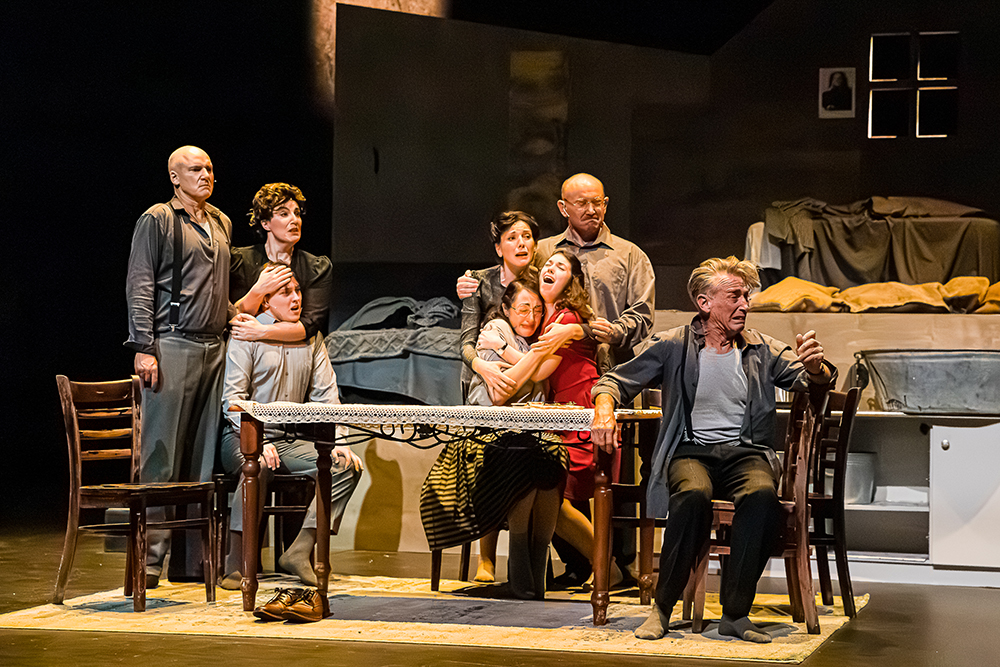
Director Drew Anthony has made a production that prioritises emotional honesty above spectacle. The staging is intimate and deliberate, reflecting the claustrophobia of the secret annexe without resorting to gimmick. As my guest Marleen Campbell described it: “The staging is intimate and powerful, allowing the audience to feel almost present in the confined space where Anne, her family, and others hid.” That physical compression — eight people, two years, one hiding place — is rendered with a theatrical restraint that makes every moment feel urgent.
The creative team includes production and lighting design by Drew Anthony alongside Jason Bovaird, with costume design by Annette Stivaletta. Collectively, they achieve something genuinely difficult: a visual world that is period-authentic without feeling like a museum exhibit. The light in particular does extraordinary work — shifting from warm domestic pools to something colder and more precarious as tension builds.
Chloe-Jean Vincent as Anne Frank
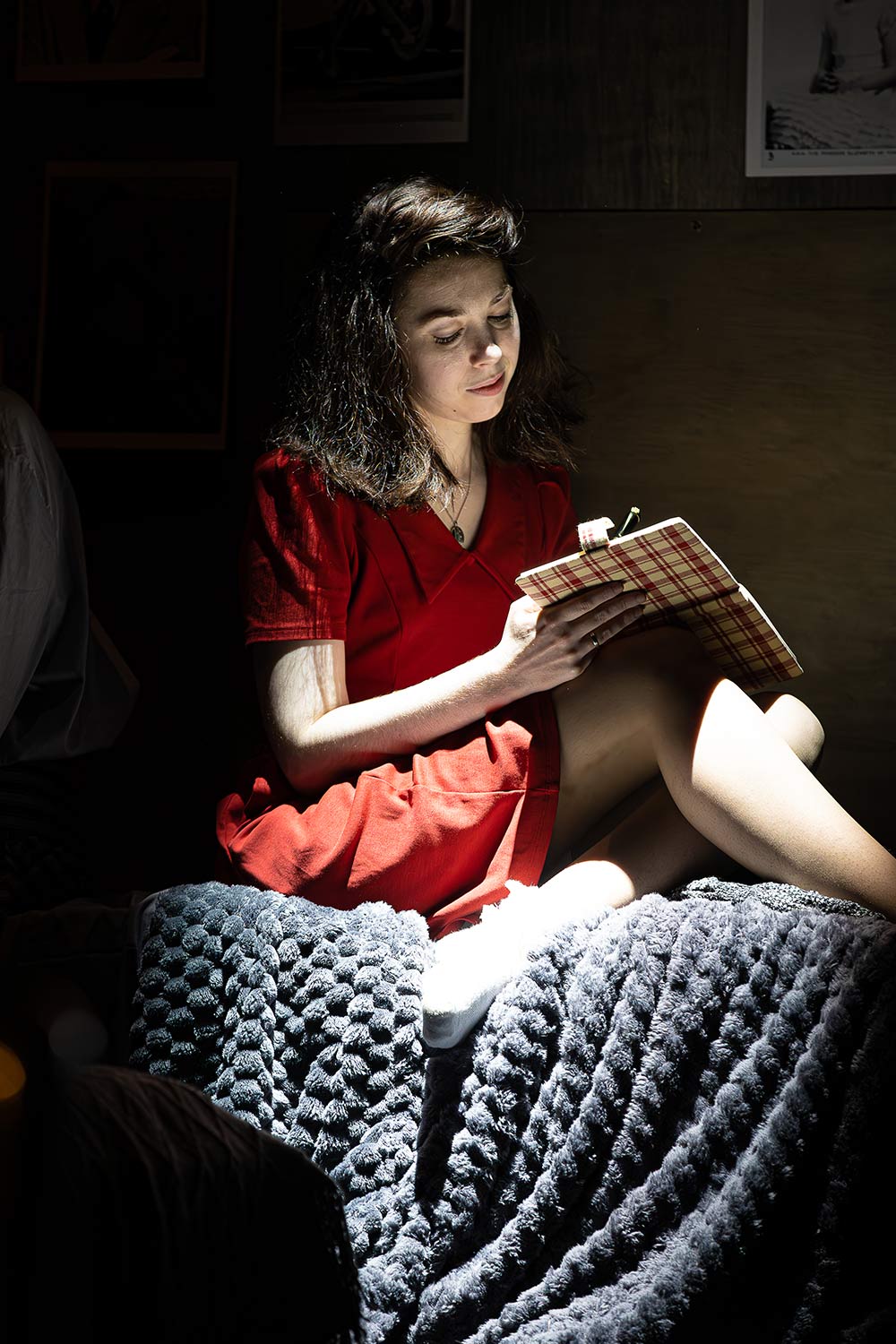
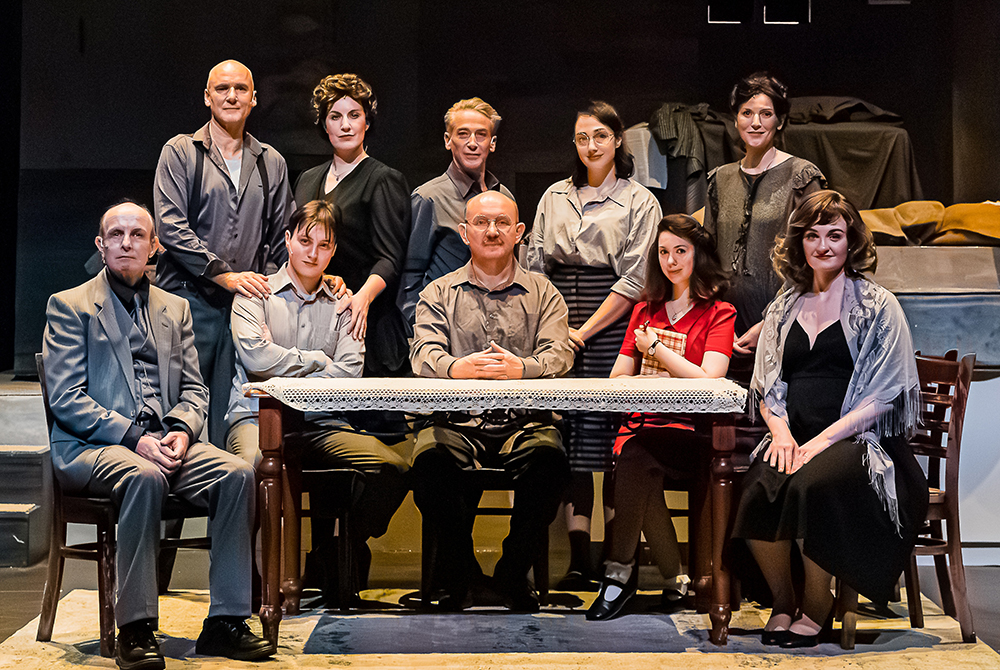
The production lives and breathes through its cast, and centre stage is Chloe-Jean Vincent in the role of Anne Frank. It is a performance of considerable skill and grace — she holds the enormity of the real person without being crushed by it. Anne on stage is not a monument; she is a teenager, funny and sharp and full of contradictions, which makes the tragedy all the more devastating.
The full ensemble — including Phil Bedworth as Otto Frank, Holly Easterbrook as Edith Frank, and Nathan Hampson as Peter Van Daan — brings collective weight and humanity to every scene. Marleen noted that “the performance brings Anne’s perspective to life. Through her words and emotions, we are reminded that behind the historical events were real people trying to hold on to hope, dignity, and humanity.” That is precisely it. This production insists, quietly and consistently, on the personhood of every character.
The play runs for approximately two and a half hours including one interval — enough time to fully inhabit the world of the annexe and feel the full arc of the story.
Why This Story Matters Right Now
Director Drew Anthony has spoken candidly about why he felt compelled to bring this production to Australian audiences: “As prejudice and division continue to challenge our world, Anne’s diary serves as a vital reminder to learn from the past, value our freedoms, and strive toward a more hopeful future.”
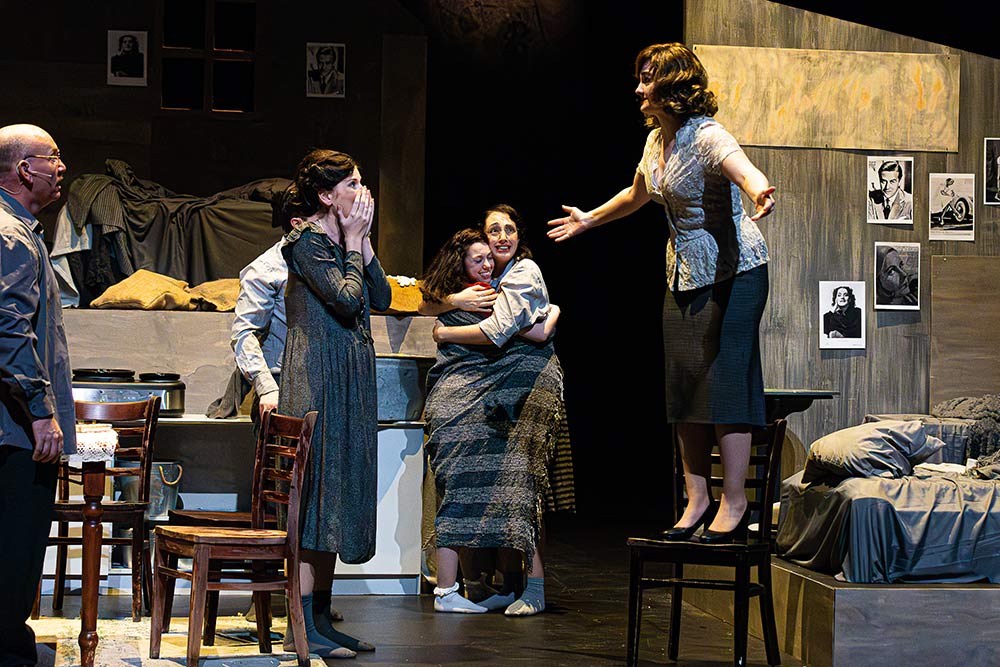
Sitting inside the Athenaeum on opening night, surrounded by a diverse audience, that message felt neither heavy-handed nor remote. It felt current. The Melbourne Holocaust Museum has endorsed the production as “deeply authentic and beautifully crafted, honouring Anne’s voice with integrity” — and that endorsement carries real weight.
Marleen said it well: “The play captures both the innocence and the courage of a young girl whose voice continues to resonate decades after her death.” Anne Frank’s diary was never intended for publication. Her father Otto, the sole family survivor of the camps, chose to honour her wish to be a writer by publishing it after the war. That act of love and remembrance is itself a kind of resistance — and it is woven through every moment of this production.
A Note on the Athenaeum Theatre
The Athenaeum Theatre at 188 Collins Street is one of Melbourne’s most loved and intimate venues — and it is exactly right for this production. The scale creates proximity; you are close enough to see every expression, to feel every silence. There is no distance to hide behind, which is perhaps the point. Anne Frank could not hide forever. And this theatre, on this night, did not let the audience look away either.
Should You Go?
Without hesitation: yes. Whether you read the diary as a teenager, whether you’ve never engaged with this story before, whether you’re bringing a young person or attending with a friend — this production will give you something real. It is theatre as witness. Theatre as responsibility. Theatre at its most necessary.
The Diary of Anne Frank is recommended for audiences aged 10 and above, and runs at the Athenaeum Theatre, Melbourne, until March 21, 2026. Tickets are available via ticketmaster.com.au.
Frequently Asked Questions
What is The Diary of Anne Frank about?
The play dramatises the true story of Anne Frank, a thirteen-year-old Jewish girl who hid with her family in a secret apartment in Nazi-occupied Amsterdam for two years during World War II. It is based on her diary, published posthumously by her father Otto Frank, and brings to life both the intimacy and the terror of their life in hiding.
Who wrote the stage play of The Diary of Anne Frank?
The stage adaptation was written by Frances Goodrich and Albert Hackett and first performed on Broadway in 1955. It won the Pulitzer Prize for Drama, the Tony Award for Best Play, and the New York Drama Critics’ Circle Award.
Who is in the cast of the Melbourne production?
Anne Frank is played by Chloe-Jean Vincent, with Phil Bedworth as Otto Frank, Holly Easterbrook as Edith Frank, Emma Smith as Margot Frank, Nathan Hampson as Peter Van Daan, and Grace Tolich as Miep Gies, among others.
Where is The Diary of Anne Frank playing in Melbourne?
At the Athenaeum Theatre, 188 Collins Street, Melbourne CBD.
Is The Diary of Anne Frank suitable for children?
The production is recommended for audiences aged 10 and above. It deals with themes of war, persecution and loss, and is best attended with children who are emotionally ready for those conversations.
How long does the show run?
Approximately two and a half hours, including one interval.
Will this production tour after Melbourne?
Yes — the production moves to the State Theatre in Sydney following the Melbourne season.
Disclaimer: Glamorazzi representative Roslyn Foo and guest Marleen Campbell attended the opening night of The Diary of Anne Frank on 5th March 2026 at Athenaeum Theatre Melbourne, invited by AE Creative Communications. All opinions expressed are our own.