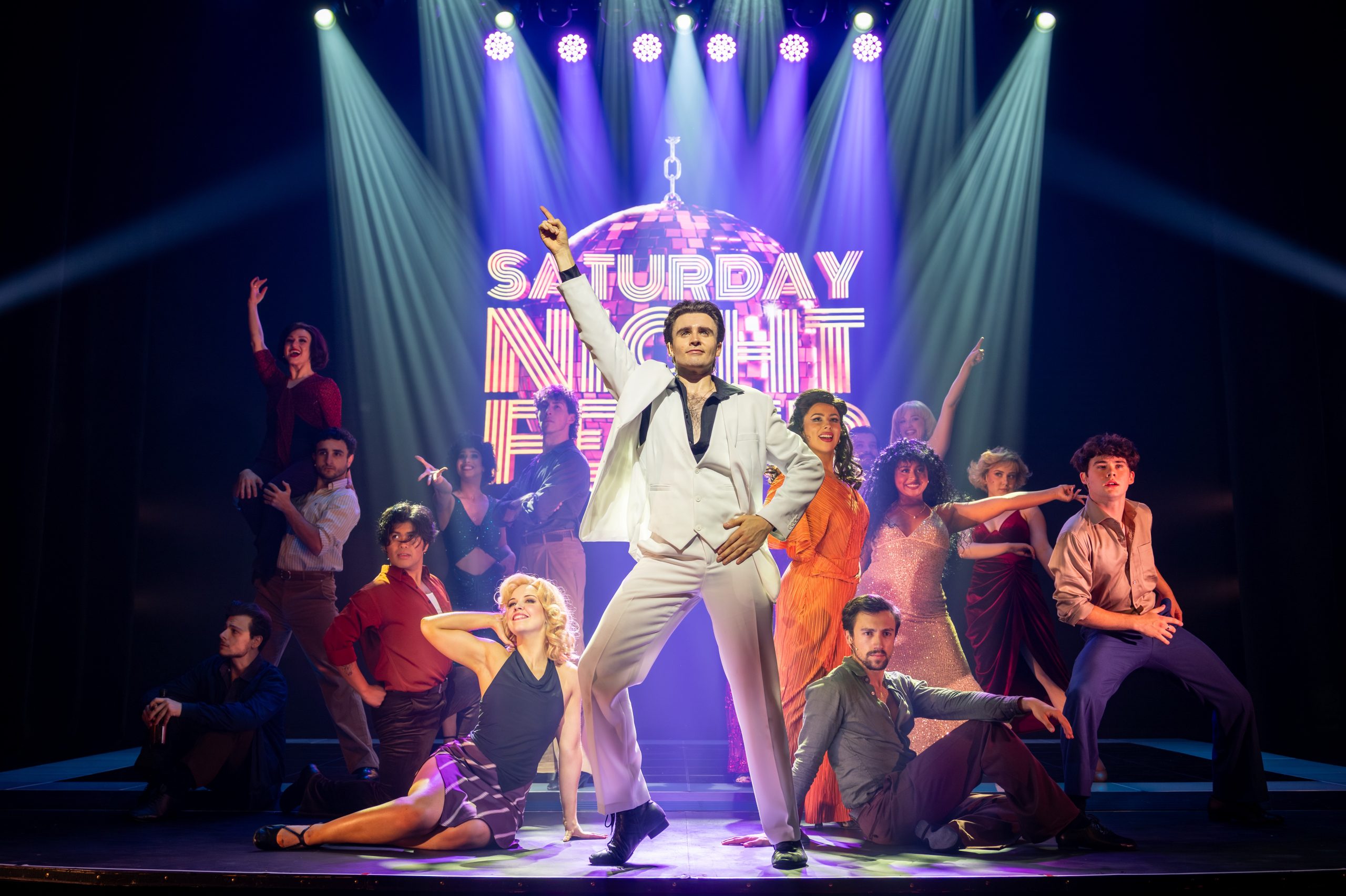
Saturday Night Fever at the Athenaeum Theatre goes beyond reviving the cult classic; it asks a question that feels painfully current for anyone who has ever tried to reinvent themselves: how honest are you willing to be with your own reflection?
They got me at “How Deep Is Your Love.” I couldn’t help it – the first notes hit and I was already singing along under my breath, somewhere between 1977 Brooklyn and 2026 Melbourne. On opening night, 10 January 2026, artist Sebnem Gencer and award‑winning videographer Sunny Wu joined me in a packed house that buzzed like a mirror‑ball – sequins, satin and a few brave flares sprinkled through the crowd. By the time the lights dropped and the famous bassline of “Stayin’ Alive” kicked in, it was clear this was not a safe, museum‑piece nostalgia trip; Drew Anthony Creative’s production walks the fine line between glitter and grit, and mostly dances right on top of it in platform heels.
A High‑Energy Disco Spectacle with Real Teeth
Sunny summed up the first act perfectly as we spilled out into interval:
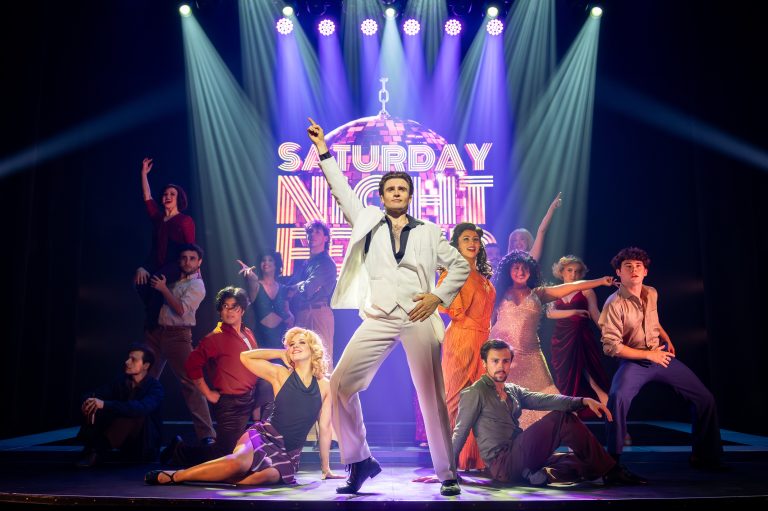
A high‑energy disco spectacle, Saturday Night Fever pairs a striking LED screen backdrop with iconic tracks and tightly calibrated choreography. The cast's contagious energy drives sharp, athletic dance numbers that feel fresh, stylish and unapologetically fun."
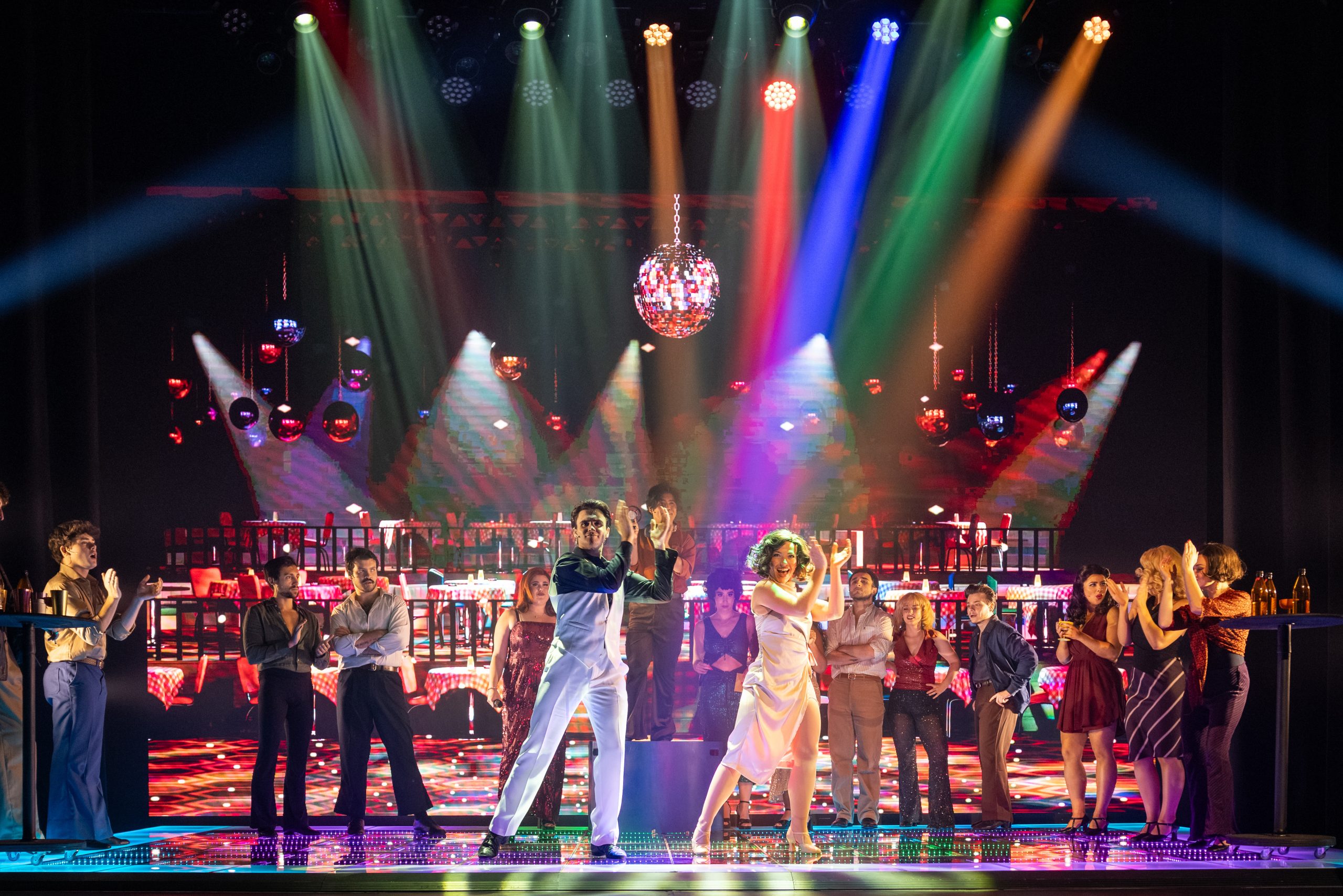
That LED world is the show’s visual heartbeat – a towering digital canvas that flips from smoggy Brooklyn streets to pulsing nightclub in a breath, wrapping the dancers in saturated colour and vintage grit. Rather than simply recreating the film, the high‑definition digital set slices in familiar shots and textures like memory fragments, reminding you this story sits between cinema fantasy and working‑class reality.
Choreography from Jamie and Suzi Rolton is tight, muscular and relentlessly in service of character. Disco can so easily tip into parody, but here the movement lands with precision – hips grounded, arms slicing through light, bodies colliding and recoiling in patterns that echo loyalty, violence, longing and escape.
Ethan Churchill’s Tony Manero: Swagger, Panic and Hope
At the centre of it all is Ethan Churchill, returning to the role of Tony Manero after his award‑winning Perth season – and it shows. His Tony moves through the world like the club floor is the only place where gravity makes sense, yet in the moments between songs you see the panic: a 19‑year‑old Brooklyn Italian kid stuck in a paint store, in a family where shouting is easier than tenderness and dreams don’t pay rent.
Churchill’s physicality is thrilling – every spin, slide and head roll is loaded with attitude – but what lingers is the quiet. The hesitation before an apology, the way his shoulders sink when the Manero dining table becomes a verbal boxing ring, the flicker of shame when he realises that winning a disco contest might not be enough to save anyone.
This Tony is not a cartoon macho hero; he’s a young man desperate to be somebody, dragged between the expectations of his family and the possibilities Stephanie represents a few train stops away in Manhattan.
All production images credit to photographer Ben Fon.
Stephanie, Annette and the Women Who Hold the Story’s Spine
Regan Barber’s Stephanie Mangano arrives like a sharp inhale. She has one high heel already pointed toward Manhattan, a typewriter in an office full of suits and just enough distance from Brooklyn to see how small the old world is becoming. Her duets with Tony crackle – not just with romance, but with friction: ambition versus comfort, authenticity versus performance.
Izzi Green’s Annette is the soul this story often sidelines, but not here. Green gives her a bruised, stubborn dignity that makes her more than the “girl left behind”; Annette becomes the mirror that shows Tony the collateral damage of his ego, and her musical moments land with a raw ache that cuts through the glitter.
Chelsea Plumley as Flo Manero and George Kapiniaris as Frank Manero paint a family portrait that feels painfully familiar to many migrant and working‑class households: love expressed as criticism, fear disguised as control. Their scenes keep the story grounded – this isn’t just about a boy who wants to dance; it’s about a family terrified of what happens when one of them steps out of line.
Brotherhood, Bravado and the Boys on the Edge
The tight trio of Tony’s friends – Sam Hamilton’s Bobby C, Dimitri Raptis’ Double J and Ewan Herdman’s Joey – embody the dangerous warmth of a chosen family that never learned how to talk about pain. Their banter is filthy and funny, their loyalty fierce, but their nights spin further into recklessness as the story darkens.
Hamilton’s Bobby C, in particular, is devastating. His storyline moves from nervous jokes to unbearable consequence, and his scenes remind the audience that beneath the bangers and bell‑bottoms, Saturday Night Fever is about young men who were never taught a language for fear, grief or tenderness.
In this production, the “boys will be boys” energy is not excused; it is examined. When things go too far, the discomfort is deliberate – a sharp reminder that charisma without accountability can burn down everyone in its orbit.
The Bee Gees Soundtrack: Joy That Won’t Sit Still
There’s a reason this soundtrack is one of the best‑selling film scores in history: the Bee Gees understood how to lace heartbreak into a four‑on‑the‑floor groove. Under Daniel Puckey’s musical direction, every familiar hit lands with the force of a memory you didn’t realise your body was holding.
“Stayin’ Alive” struts, “Night Fever” smoulders and “Jive Talkin’” becomes a cheeky, kinetic playground for the ensemble. But for me, the gravitational centre was “How Deep Is Your Love.” When that melody floated into the theatre, time thinned; I felt the entire audience soften and lean, as if we’d all been waiting to exhale together.
They got me at “How Deep Is Your Love”. I can’t help but started singing along! Saturday Night Fever reminded us how important it is to listen to your heart and to have the courage to be authentic – be it good or bad, we have to face ourselves, our truths.
LED Dreams, Digital Brooklyn and the Politics of Escape
Drew Anthony and Aquixel Studios’ digital production design is one of the show’s secret weapons. The LED panels don’t just decorate the stage; they expand it, folding the characters into skylines, subway tunnels and dance‑floor mosaics that feel almost cinematic in their depth.
This heightened visual world cleverly contrasts with the script’s undercurrent of economic frustration, racism, sexism and class tension. The more dazzling the club sequences become, the more obvious it is that Tony’s weekend kingdom exists on borrowed time – a luminous bubble floating above a city that doesn’t care if he sinks or swims.
The show asks a quiet but pointed question: When your whole life is one neighbourhood wide, is the dance floor an escape – or a trap dressed in mirror tiles?
Such an amazing night! The Saturday Night Fever show was phenomenal. The talents, the performance and the dance were all outstanding. Love every moment!" Sebnem Gencer
Why Saturday Night Fever Matters in 2026
In 2026, the idea of working all week in a job that drains you just to feel alive for a few weekend hours feels strikingly familiar. So does the pressure to curate a persona – on stage, online, at work, at home – that looks successful even as something inside you aches for real connection.
This Saturday Night Fever does not pretend that a perfect spin or a glittering win can fix systemic problems. What it does offer is something subtler and, to me, more hopeful: the courage to look directly at the parts of ourselves we’d rather hide, and to choose something more honest than autopilot.
Tony’s journey won’t tidy itself into a self‑help slogan. But watching him stumble toward accountability – to Annette, to Stephanie, to himself – felt like a small act of rebellion against the idea that survival alone is enough.
Should You See Saturday Night Fever at Athenaeum Theatre?
If you love the Bee Gees, you’ll have a seriously hard time staying in your seat. If you grew up on the film, you’ll recognise the bones of the story, but expect sharper edges and a more explicit reckoning with the darker moments.
If you’re just discovering Saturday Night Fever now, this production is a strong place to start: a high‑gloss disco inferno with a beating, questioning heart. For anyone straddling two worlds – duty and desire, tradition and self‑expression – there’s something hauntingly relatable about a boy from Brooklyn trying to dance his way into a bigger life.
Glamorazzi verdict: A bold, high‑energy revival that dares you to stop hiding from your own mirror ball.
FAQs: Saturday Night Fever Melbourne 2026
Where is Saturday Night Fever playing in Melbourne?
Saturday Night Fever is playing at the Athenaeum Theatre, 188 Collins Street, Melbourne.
What are the dates for Saturday Night Fever at the Athenaeum Theatre?
The Melbourne season runs from 8 January to 25 January 2026.
How long does the show run?
Expect around 2 hours and 30 minutes including interval.
Who plays Tony Manero in the 2026 Melbourne production?
Breakout Perth performer Ethan Churchill reprises his award‑winning role as Tony Manero.
Is Saturday Night Fever suitable for kids?
Due to mature themes (domestic conflict, sexual content, strong language and scenes that may distress younger viewers), this production is best suited to audiences aged 13+ with parental guidance.
Where can I buy tickets for Saturday Night Fever Melbourne 2026?
Tickets are available via Ticketmaster at ticketmaster.com.au
What makes this production different from the original film?
This reimagined staging leans into the story’s darker social themes while using LED‑driven digital sets, contemporary theatrical choreography and a tight Australian cast to give the material new urgency.
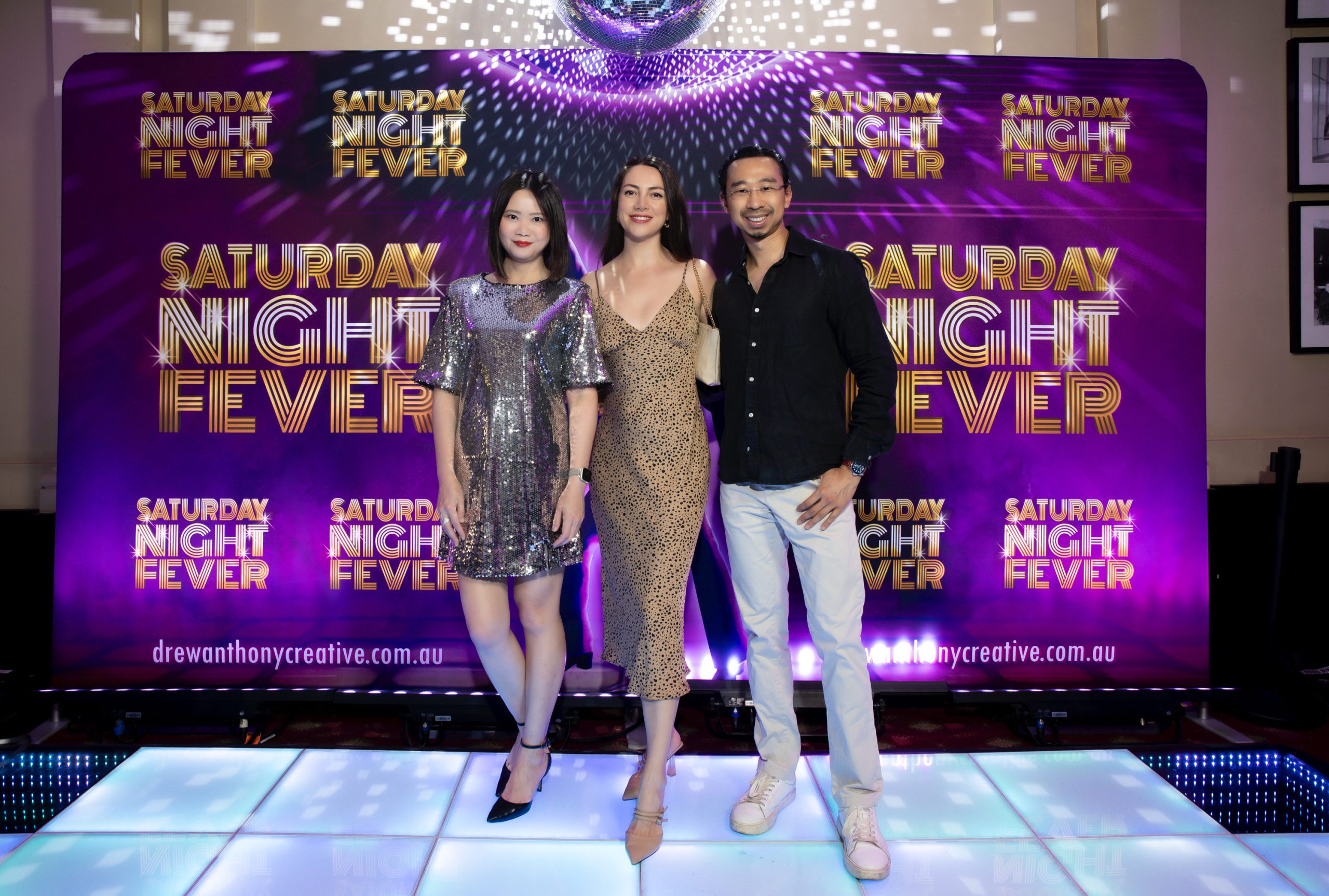
Disclaimer: Glamorazzi representatives Roslyn Foo, Sebnem Gencer and Sunny Wu attended the opening night on 10th January 2026 at The Athenaeum Theatre Melbourne, invited by AE Creative Communications. All opinions expressed are our own.